
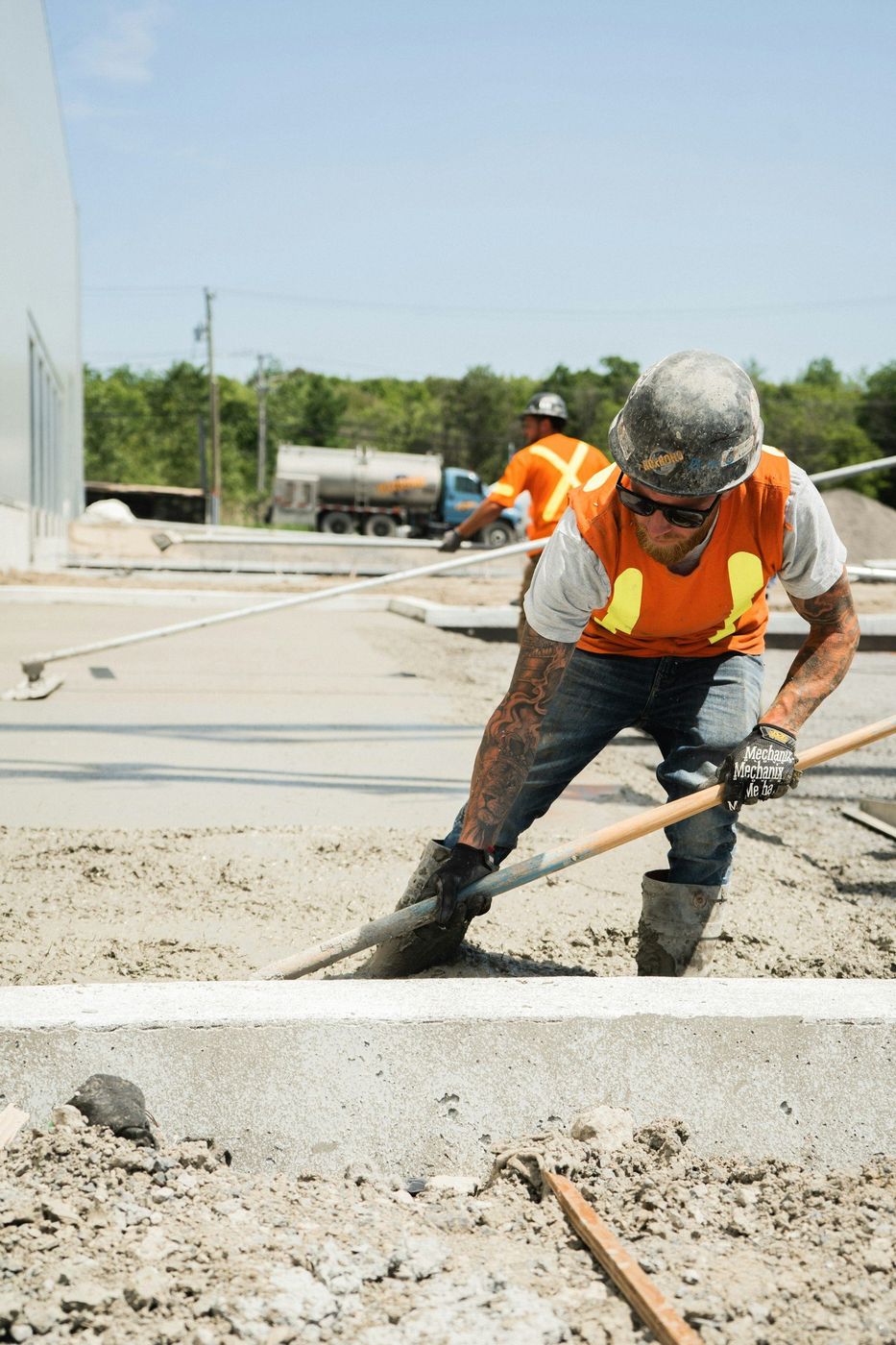
The first question isn't whether resurfacing works. It's which slab you're asking about, because the answer changes completely.
Half an inch of new material behaves one way under a shoe and a completely different way under a truck tire that turns in place. That's why we won't give a blanket yes or no on resurfacing. A worn front porch and a spalling driveway apron are two different bets even on the same property, even poured the same week by the same crew.
So this page sorts it by surface. Where a new wearing layer is a genuinely good buy in Arvada, where it's a stopgap you should walk into knowing it's a stopgap, and where we'd tell you to put the money toward replacement instead. We do plenty of this work and we turn down plenty of it, and the difference is nearly always which slab we happen to be standing on.
The material is a polymer-modified cement product placed thin over concrete that's been opened up so it can grip. It's harder than the slab beneath it and it can carry texture, color, and pattern. What it cannot do is add strength. There's no thickness to speak of and no reinforcement in it, so it borrows every bit of its structural performance from the concrete underneath.
That one fact answers most of the questions people bring us. It's why a worn surface over a sound slab is a great candidate and a cracked slab over a failed base is not. It's why a resurfaced driveway takes cars fine and still won't stop a panel from rocking. And it's why we spend far more time tapping, measuring elevations, and studying edges than we do talking about color. The pretty part takes an afternoon. Deciding whether to do it at all is the actual service.
| Surface | How it usually fails | Our call |
|---|---|---|
| Front porch or stoop landing | Scaling and flaking from deicers and roof runoff | Excellent. Small area, high visibility, almost no structural demand |
| Back patio | Paste worn away, dull, stained, nothing moving | Excellent, and the place where color and texture pay you back the most |
| Driveway field | Even surface wear and discolored tire paths | Good when nothing has settled. Watch the apron and the turning areas closely |
| Driveway apron at the street | Heaviest loads, plow contact, deicer concentrated there | Marginal. This is where we most often say replace the section instead |
| Sidewalk panel with a trip edge | One panel lifted by roots or frost | No. Level or replace that panel. A topping does not remove a trip hazard |
First, elevation change across a joint. If one panel sits higher than its neighbor, the base has already moved and it's still capable of moving. Nothing thin holds that together. Second, a hollow sound. Tap around with a hammer and if a section rings empty, water has taken the support out from under it, and a new surface over a void is a floor over a hole. Third, cracks with vertical displacement, or cracks with dirt washing up through them. A dormant tight crack can be routed, filled, and honored with a joint in the new work. A crack that's still working is a message from the ground.
Send a photo of the surface and one of the worst spot, and we'll say resurface, repair, or replace. Call (303) 569-4046.
Everything about a resurfacing job comes down to bond, and bond is prep. Pressure wash and degrease, then shot blast or grind until the surface has a real profile, then dampen the slab to saturated surface dry so it can't pull water out of the mix, then scrub a bond coat in ahead of the material. Skip any of those and the topping comes off in sheets at the first hard freeze, taking a piece of the old surface with it.
The working season runs May into early October. The material wants several nights above freezing after placement to build strength, and the placement window on a hot dry day is short enough that we start early and keep the mixing station moving all morning. September is the best month for it: mild, dry, and no afternoon cells to dodge. We won't place an exterior topping in November and promise you it'll hold, because a surface that freezes before it cures delaminates and there's no repairing that.
What happens afterward matters as much as the day itself. Keep deicers off a resurfaced slab permanently, since a quarter inch of topping has nowhere to hide from chlorides. Sand, a plastic-edged shovel, and a reseal on schedule. West Woods and the streets around Olde Town send us most of these calls. Out in Candelas and Whisper Creek it is usually a porch or a patio somebody wants to look like something other than builder gray.
Still unsure about something?
Call the crew at (303) 569-4046 and we will talk it through.
Get a free, no-obligation estimate from a crew that knows Colorado soil, Colorado weather, and how to finish concrete that lasts.
Accessibility
Adjust the site to fit how you read and browse. Your choices are saved on this device.