
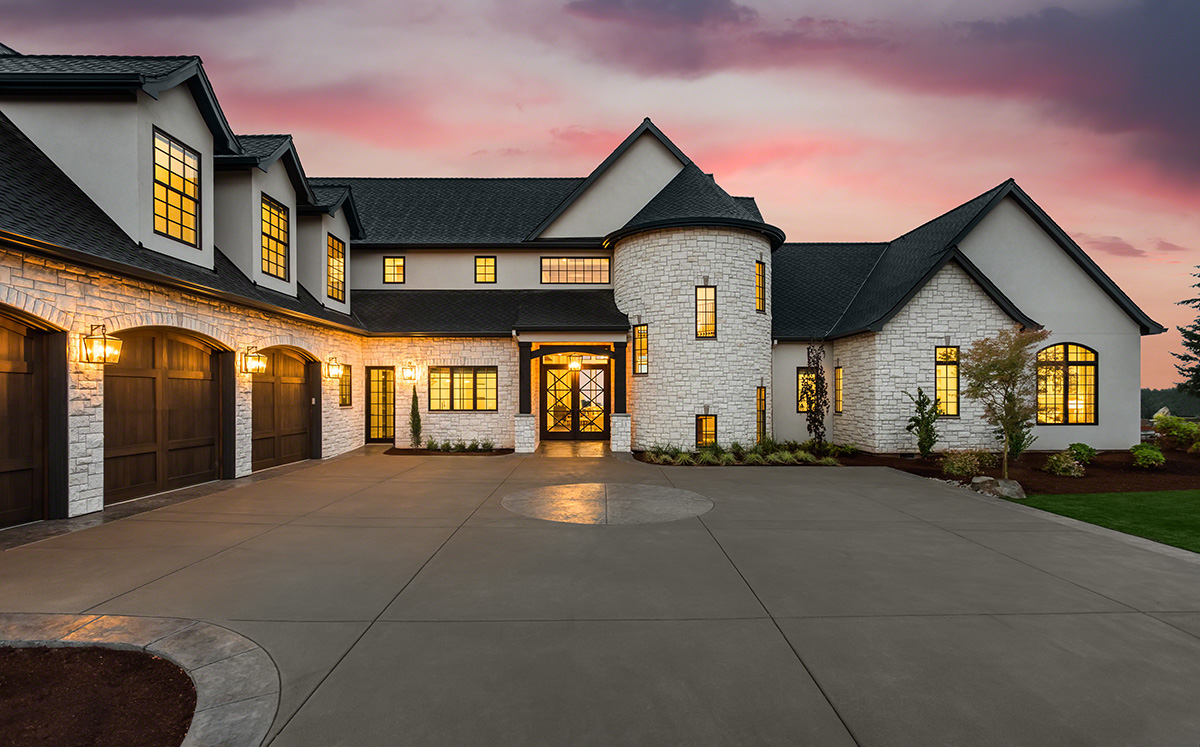
Heavy-duty pads sized and reinforced for the load.
An RV, a loaded boat trailer, or a fifth-wheel does not park like a car. The weight is heavier, and it lands on a few small contact patches instead of spreading out. Park a thirty-foot motorhome on a slab poured for sedans and you concentrate tons onto a handful of points. That is how a driveway-spec pour ends up spider-cracked at the tires and crumbling at the edges within a couple of seasons.
A real RV or boat pad is built around the load from the ground up. That means a thicker slab, a properly compacted base, and steel sized to carry the weight without flexing. On the Front Range it also means building for the soil and the weather under that slab. Expansive clay swells and shrinks with moisture, and the freeze-thaw cycle works on any water that gets in. We pour pads that handle the rig and the ground it sits on, so you can park heavy and not think about it.
We fix the base and drainage behind the old failures so the new slabs do not crack the same way. For rv & boat pads, that local knowledge is exactly what protects your investment. We plan the base, drainage, reinforcement, and finish around the conditions on your Wheat Ridge property, not a generic detail.
We serve every part of Wheat Ridge and the surrounding area, including Applewood, Paramount Heights, Hopkins. Wherever you are in Jefferson County, the crew shows up with the same standard.
At roughly 5,413 feet, Wheat Ridge gets intense high-altitude sun and a freeze and thaw cycle that is hard on any concrete poured without care. For rv & boat pads, that means air-entrained mixes, deliberate curing, control joints cut on time, and a base prepared for the expansive clay under your property. It is the difference between work that holds for decades and work that starts failing by the first or second spring.
The difference between a pad that lasts and one that fails is mostly underneath, where you cannot see it. A standard residential slab is poured thin because it only ever carries car weight. We pour RV and boat pads thicker, and we reinforce them with rebar or mesh sized to the load you are actually parking. A diesel pusher, a loaded equipment trailer, and a small fishing boat are not the same problem, so we ask what you are putting on it before we design the slab. Where the load really warrants it, we have a structural engineer on staff to spec the thickness and reinforcement. Get the steel and the depth right and the pad carries point loads without cracking through.
Concrete is only as good as what it sits on. Pour a heavy pad on loose fill or undisturbed clay and it will settle unevenly the first time the rig sits on it through a wet spring. We strip the topsoil, bring the subgrade to grade, and compact a base of the right material so the load has something solid to push against. On expansive Front Range clay this step matters more than the mix. Clay swells when it takes on water and shrinks when it dries, and that movement is what tilts and cracks slabs that were never given a stable base. A compacted base plus drainage that moves water away from the slab keeps the ground under your pad from doing the cracking for you.
This is the honest concern, and it is the right one to ask. Yes, a heavy RV will crack a pad that was not built for it. No, it will not crack one that was. The cracking people see comes from three things: a slab too thin for the point loads, no reinforcement to tie it together, or a base that settles under the weight. We address all three by design. The slab is poured to a thickness that matches your rig, the steel carries the concentrated loads at the tires and jacks, and the compacted base keeps it from sinking. We also cut control joints so the small shrinkage cracking every slab does goes where we put it, in a straight line, instead of wandering across the field. Built this way, the pad shrugs off the weight for decades.
A pad is more useful when the way onto it works too. The approach where your driveway meets the pad takes the worst of the turning and pivoting loads, so we tie it in and reinforce that transition instead of leaving a weak seam. If you want a smooth apron so the rig does not drop off an edge, we form that in. We can also rough in what you need before the pour: a sleeve for electrical to run a hookup, a spot graded for a sewer cleanout or water connection, and the pitch to keep meltwater and rain draining off the surface rather than pooling under the tires. Planning the utilities and the apron before the concrete goes down is far cheaper than chasing them after.
Every Wheat Ridge job starts with a free, written estimate and a structural engineer on staff for the work that needs one. Licensed, bonded, and insured, with finishes from a clean broom texture to stamped, colored, and sealed.
You always know what is happening and what it costs before we mix a single yard. Here is the path from first call to final walkthrough.
We visit the site, measure, check drainage and soil, and hand you a clear written quote. No charge, no pressure.
We set the grade, thickness, reinforcement, and finish. Structural work gets engineered and permitted.
Forms, rebar, and a clean pour. We screed, float, and finish to the texture you picked, then cut control joints.
You can walk it in 24 to 48 hours. We walk the job with you and explain how to care for it through the first winter.
Still unsure about something?
Call the crew at (303) 569-4046 and we will talk it through.

Get a free, no-obligation estimate from a crew that knows Colorado soil, Colorado weather, and how to finish concrete that lasts.
Accessibility
Adjust the site to fit how you read and browse. Your choices are saved on this device.