
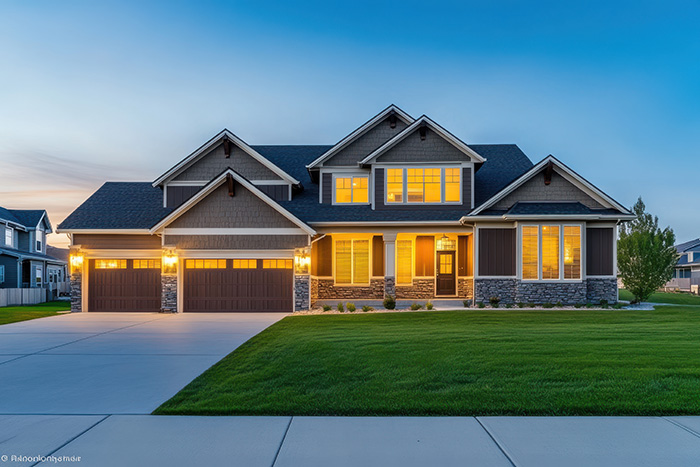
Winter is countertop season around here, because the shop stays warm long after the pour schedule outside goes quiet.
There's a stretch of January when the ground is frozen solid, nobody is pouring a patio, and the shop lights stay on past dark. That's when we build countertops. It works out for everybody. Kitchens get torn apart in winter because families are done traveling and stuck indoors anyway, and a cast top needs weeks of steady warmth to reach strength, which a heated shop can promise in February and a job site can't.
So while the flatwork calendar in Stroh Ranch and Stonegate sits quiet, we're templating kitchens, casting slabs, and grinding faces. Come spring we flip: the outdoor kitchen and grill island work picks up, and those tops get built to a different spec entirely, because a slab that lives through a Parker winter under an open sky is a different animal from one that lives beside your range.
Concrete is a chemical reaction, and reactions care about temperature. A top cast in a shop we hold near seventy degrees hydrates evenly, gains strength on a predictable schedule, and doesn't get rushed by a hot afternoon or stalled by a cold night. That control is most of the reason we cast in a shop instead of in your kitchen. We can also grind, polish, patch, and seal in a clean, dust-controlled space rather than in the middle of your house.
Winter helps the schedule too. Cabinet installers and tile crews are all working the same indoor season, so coordinating a template date is easier when nobody is racing daylight. And the one weather hazard that matters, hauling a heavy slab across a snowy driveway, is a problem we solve with planning and enough hands, not with luck.
A grill island out in Canterberry Crossing or on an acreage lot near The Pinery deals with things a kitchen top never sees. Snow sits on it. Meltwater runs into every seam and cutout, then freezes overnight and expands. Sun at this altitude bleaches pigment and cooks a soft sealer until it clouds. Hail lands on it. And whatever you spill out there stays until you notice.
We build for that instead of pretending it away. Outdoor slabs get an air-entrained mix so freezing water has somewhere to go, heavier steel because the temperature swings put real stress in the slab, a sealer chosen for UV rather than for gloss, and a slight fall on any horizontal surface so water leaves rather than pools. Cutouts around a grill or a drop-in cooler get radiused corners, since a sharp inside corner is where a crack will start when the whole assembly contracts on a ten-degree night.
| Spec | Kitchen top | Grill island or bar outside |
|---|---|---|
| Mix | Dense high-strength mix, no air needed indoors | Air-entrained, so freezing water has room to expand |
| Steel | Sized for the spans and the cutouts | Heavier, because daily temperature swings load the slab |
| Sealer | Food-safe, stain-resistant, matte or satin | UV-stable and flexible, renewed more often than the indoor one |
| Color | Anything you like; the light indoors is stable | Mid-tones hold up best; deep blacks get hot and fade fastest |
| Edges | Crisp profiles look sharp and stay sharp | Softened edges, radiused corners, no thin fragile detail |
| Winter care | Nothing special beyond normal cleaning | Cover it, blow the snow off, keep deicer nowhere near it |
Book the template now. Winter shop time is the easiest time to get on our calendar, and your top will be waiting when the cabinets are set.
Still unsure about something?
Call the crew at (303) 569-4046 and we will talk it through.
Get a free, no-obligation estimate from a crew that knows Colorado soil, Colorado weather, and how to finish concrete that lasts.
Accessibility
Adjust the site to fit how you read and browse. Your choices are saved on this device.