
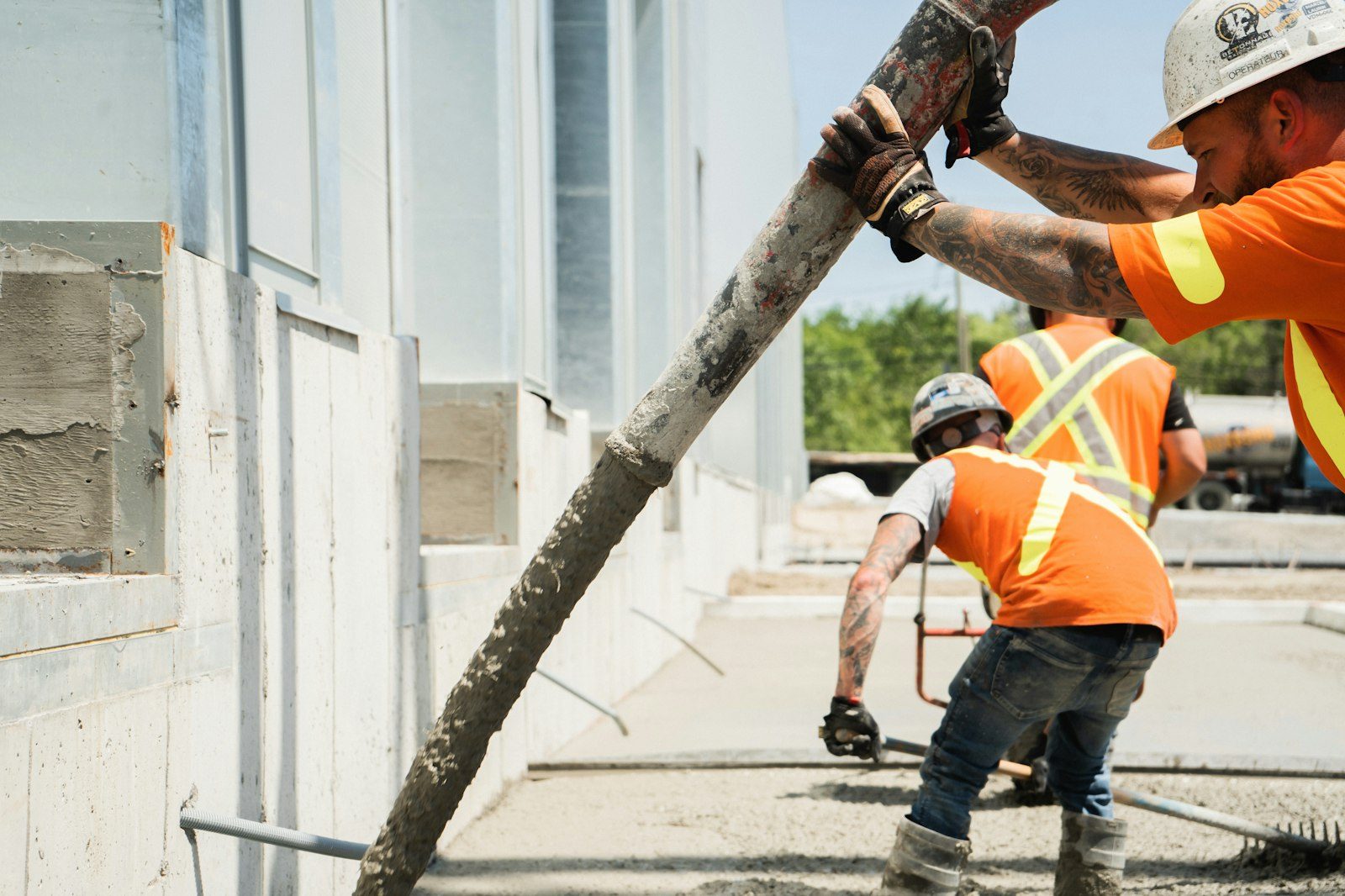
Boards get two real choices: one contract that fixes the community, or a panel count every spring for the rest of time.
Somewhere in most communities there's a spreadsheet with a number of bad panels on it, and that number goes up a little every year. The board approves a handful of replacements each spring, the manager fields complaints about the rest, and the reserve study keeps pushing a larger line item further out. That pattern can run for a decade before anybody stops to ask whether it's actually the cheaper approach.
Usually it isn't. We bid community concrete programs across Littleton, from the older sections around Columbine and Southbridge to the newer streets in Highland Walk and the foothill-edge properties out toward Ken Caryl and The Hills at Piney Creek. This page lays out the choice honestly, including the cases where patching a few panels a year is genuinely the right call.
Panel-by-panel patching feels responsible. It's a small number, it's approved quickly, and it addresses whatever a resident complained about loudest. What it hides is the cost of showing up. Every small job carries mobilization, traffic control, saw setup, notices, and a minimum crew day, and those costs barely change whether we replace six panels or sixty. Spread across six panels, they're most of what you paid.
A community-wide contract flips that. One mobilization, one traffic control plan, one round of resident notices, and a per-panel cost that drops sharply as the count goes up. It also gets you a uniform result, which matters more than boards expect. Concrete poured in one season under one mix matches itself. Panels replaced across eight different springs never will.
Now the honest counterargument. If your reserve genuinely can't fund it and borrowing isn't on the table, a phased program over two or three budget years beats waiting until you can do it all at once. Deferring while panels keep lifting is the only option that's always wrong, because trip hazards are a liability exposure and the ground is not going to stop moving out of sympathy for your budget cycle.
| What you're comparing | One community-wide contract | A few panels every year |
|---|---|---|
| Cost per panel | Drops steadily as the count rises | Stays high, since setup costs never spread out |
| Mobilizations | One, planned around the community calendar | One every year, forever, each with its own overhead |
| Appearance | Uniform color and finish across the property | A patchwork that gets more obvious every season |
| Reserve planning | One known number your study can actually model | A moving target that gets revised every year |
| Resident disruption | Concentrated into a few known weeks | Recurring, unpredictable, and never quite finished |
| Liability | Hazards cleared in one documented sweep | A standing list of known hazards you haven't gotten to |
| Contractor attention | A real project with a schedule and a project lead | A filler job squeezed between larger contracts |
If the budget only covers part of it, spend in this order. Trip hazards on the walks residents use every day, especially near mailboxes, guest parking, or the path to an amenity. Then drive approaches, because a broken approach spreads into the street section and gets expensive late. Then curb and gutter where the flowline has failed, since standing water writes next year's panel list. Cosmetic cracking goes last, sometimes never.
One thing we push back on: grinding as a permanent strategy. Grinding a lip flat is a cheap, fast, legitimate way to clear a hazard on a panel that's sound and stable. It is not a fix for a panel that's still moving. If the same spot needs grinding twice, that panel has told you what it plans to keep doing.
Season matters on a program this size. Late spring through early fall, with the biggest phases in the cooler shoulder weeks. Community work means many small placements on many different days, and afternoon storms are the enemy of small placements. Early starts and a willingness to stop are part of the plan.
Send us the list or the reserve study excerpt. We'll walk the property and give the board both options priced side by side.
The question we get from every board is why two panels poured the same week, twenty feet apart, are in totally different shape. Nine times out of ten one of them has a downspout or a sprinkler head feeding water under it and the other one doesn't. Replace it without fixing that and you'll be looking at the same panel again.What our crew lead tells homeowners
Still unsure about something?
Call the crew at (303) 569-4046 and we will talk it through.
Get a free, no-obligation estimate from a crew that knows Colorado soil, Colorado weather, and how to finish concrete that lasts.
Accessibility
Adjust the site to fit how you read and browse. Your choices are saved on this device.