
Where the rig can park has less to do with your lot size than with the decade your block went in.
Two houses, both on a fifth of an acre, and one can hold a thirty-foot trailer while the other cannot fit a utility trailer past the gate. The difference is not acreage. It is what the builder did with the setback and where they put the garage, and in this town that tracks almost perfectly with when the street was platted.
Mid-century blocks around Belmar tend to give you a long side yard and a driveway that runs past the house instead of stopping at the door, which is the single friendliest layout for a rig. Applewood and the older parcels near Bear Creek often have real room and mature trees to work around. Green Mountain hands you slope and rock. Solterra hands you a wide apron out front, tighter side setbacks, and covenants worth reading before you spend a dollar. We build pads on all of it, and the build changes with the ground.
On the older streets, the pad usually goes down the side of the house and the whole project turns into an access question. Can a truck reach the forms from the drive, or is everything coming in by buggy through a gate built for a lawnmower? Those lots also hide decades of surprises: an abandoned clothesline footing, a hand-poured slab somebody made for a camper in another era, irrigation nobody has a map of.
Newer construction flips the problem. The dirt is documented, the utilities are marked, and the yard is compact, so the pad often lands off the driveway out front instead of beside the house. That brings the covenant conversation and a hard look at apron room. Different puzzle, same first step: we measure the rig, not the yard.
| Method | When it is the right call | What it does to the yard |
|---|---|---|
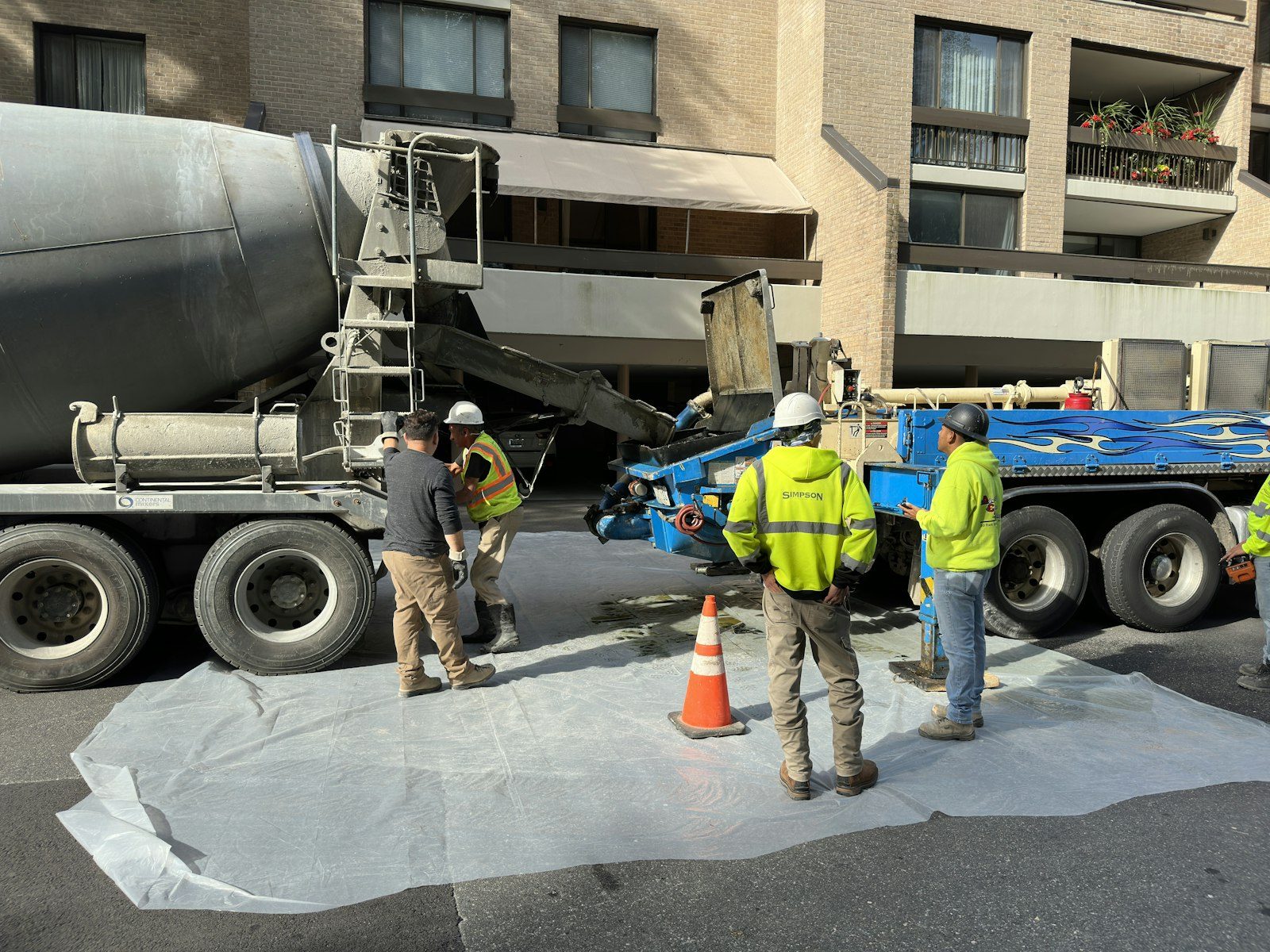
| Chute off the truck | Pad is within reach of the driveway or street | Almost nothing. Fastest and cleanest option there is |
| Buggies over plywood | Short haul through a gate three feet or wider | A tracked path of flattened grass that recovers in weeks |
| Line pump | Long haul, narrow gate, or a step down into the yard | A hose route to protect. Wash water needs somewhere to go |
| Boom pump | Pad sits behind the house with no ground route | Needs a big clear spot out front and no wires overhead |
| Alley or rear access | Older blocks where the lot opens to a lane | Best surprise on any bid. Turns a hard pour into an easy one |
Up toward Green Mountain and the foothill edges we hit rock and grade. Rock is not automatically bad news. A pad bearing on undisturbed rock does not settle, and the work moves from compaction to excavation and drainage. What we watch for there is water tracking downhill and arriving under the slab, so the pad gets a positive fall built into it and often a gravel drain along the uphill edge, because a rig parked on a pad that ponds is a rig sitting in a pond.
Down on the flats the soil is the sticky kind that changes volume with moisture, and the answer is depth and separation rather than a thicker slab. We over-excavate, put in more base than a driveway would get, compact it in layers with a plate or a roller, and keep the pad from tying rigidly into anything that moves at a different rate. Steel does the rest. Rebar, tied, sitting on chairs. Mesh belongs in a sidewalk, not under fourteen thousand pounds sitting on four jack pads.
That plus a look at your access sizes the pad and prices it. (303) 569-4046.
Measure the rig with the bumper rack on and the spare hanging off the back, then add room to stand behind it with the door open. Width is the same story: mirrors and awning are wider than the body. And plan the swing. The pad only helps if you can line up on it, which is why we usually pour a flared apron where it meets the drive, so a tight turn does not put a rear tire in the flower bed at dusk.
We keep the surface slightly off level on purpose so meltwater leaves. A quarter inch per foot is invisible under the rig and it is the difference between a dry pad and an ice sheet in January. Tell us which end the sewer connection and shore power land on, and where you want a conduit sleeve, because that gets decided before the pour and not after.
April into November is the working season, and September and October are the smartest months to book: dry ground, no afternoon storms, and a month of cure before the pad sees real weight. Cold-weather pads happen with heated water and blankets. Frozen subgrade is a hard stop.
Still unsure about something?
Call the crew at (303) 569-4046 and we will talk it through.

Get a free, no-obligation estimate from a crew that knows Colorado soil, Colorado weather, and how to finish concrete that lasts.
Accessibility
Adjust the site to fit how you read and browse. Your choices are saved on this device.