
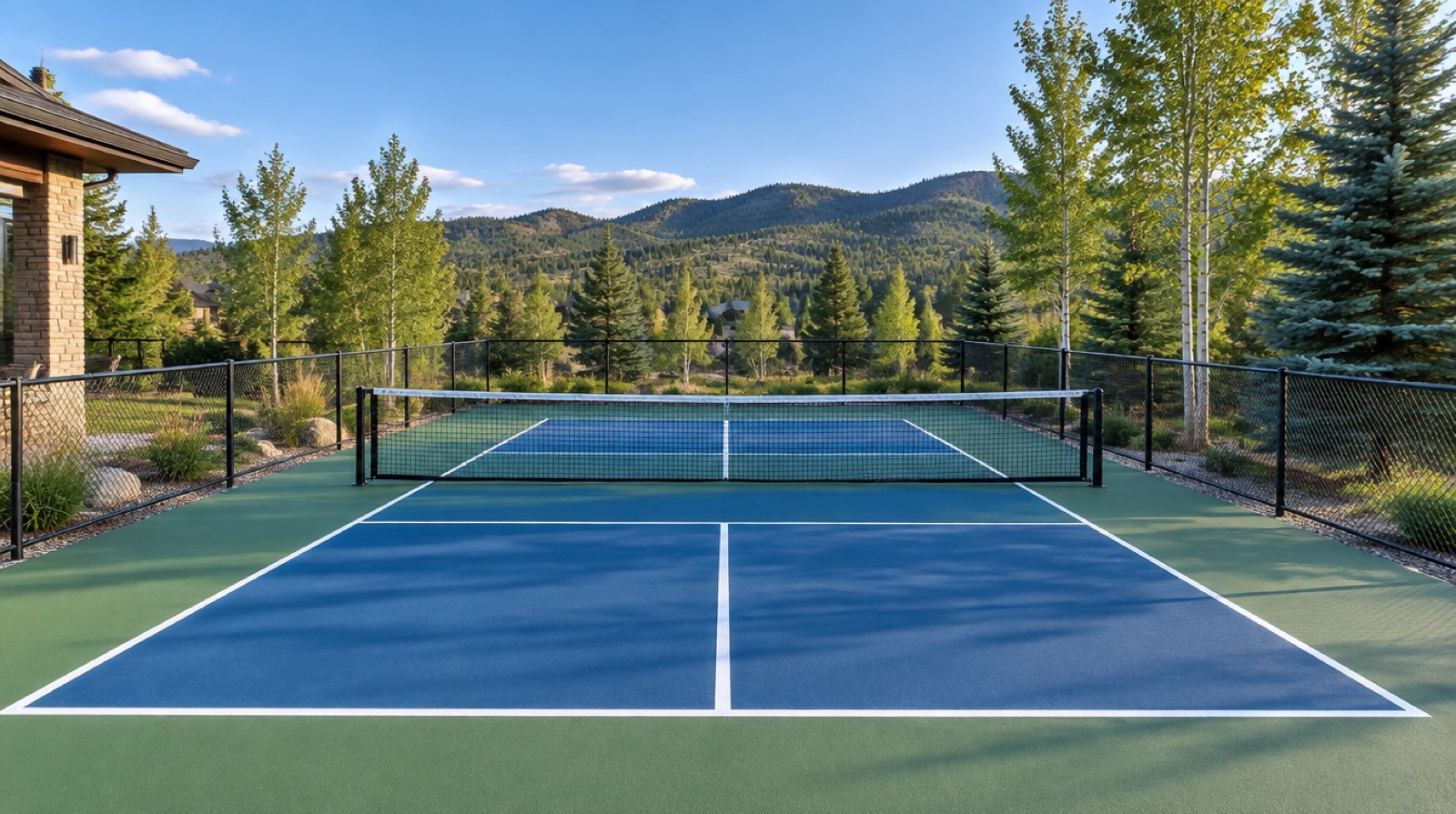
Courts get judged by the people who play at seven in the morning and again at eight at night, and they notice everything.
A new court gets used harder than anyone on the board expects. The early group is out before the dew burns off. Midday it's whoever works from home. Late afternoon the kids take it, and then the serious players show up after dinner and stay until they can't see the ball. On a decent-weather week in Lakewood that's fifteen hours a day of shoes pivoting on the same few square feet.
Court slabs are something we build for associations and commercial property around Lakewood: newer communities like Solterra, amenity areas up on Green Mountain, older shared spaces closer to Bear Creek. We pour the concrete and hand it to the surfacing crew ready. Everything below is about what daily play does to a court, and which construction decisions the players will actually feel.
Pickleball is a game of short, hard lateral movement in a small box. The kitchen line takes an enormous share of the total footwork on a court, and so do the two service positions. That means wear concentrates in maybe fifteen percent of the surface, and it means any flaw in those areas becomes the most discussed topic in the community.
Flatness is what players sense before they can name it. A ball that dies in one corner, a bounce kicking sideways near a line, a puddle that outlasts every other court by an hour. Those aren't surfacing problems. A color coat is a couple of thin layers and it copies whatever it's rolled onto.
Joints are the second thing they feel. Any joint crossing the playing area is a candidate for a bad bounce, and once one appears players route around it and then complain about it, in that order. So jointing gets planned to the court layout instead of a default grid, pushed outside the lines wherever the slab allows.
| What players say | What's actually happening | Where it comes from |
|---|---|---|
| The ball dies in that corner | A soft spot absorbing energy from the bounce | Base compaction that varied across the pad |
| There's a weird kick near the line | A joint or a slight ridge sitting inside the playing area | Jointing laid out on a default grid instead of around the court |
| It's still wet here after everything else dried | Water has nowhere to run from that spot | Slope that changed direction, or a birdbath left by the finish |
| You can't see the ball after seven | Low sun straight down the length of play | Court orientation chosen by the shape of the space, not by the sun |
| Cracks are showing through the paint | The slab underneath moved and the coating followed | Reinforcement or base that couldn't hold the slab as one piece |
| Balls keep rolling to the same fence corner | Slope doing exactly what we built it to do | Normal. That corner is the low end, and that's where the gate should not be. |
Send us the space you're considering and how many courts you want eventually. We'll tell you what fits and what the pad should be.
Play here runs later into the year than newcomers expect. A calm, sunny January afternoon pulls people out, and courts get used in months when nobody would consider the pool. That's the argument for orientation and drainage: a court holding a wet patch in the shade sits unusable for days after a light snow, while a well-drained one is back by lunch.
Altitude sun is the surface's main enemy. Color fades, and texture wears from UV and shoes together. Concrete can't stop that. What it can do is stay uncracked so the coating has a stable base and recoating stays a maintenance item. Hail is the other threat, and a hard storm will ruin a slab that's still being finished, which is why somebody watches the sky all July afternoon.
Scheduling has a wrinkle people forget: surfacing needs both cured concrete and its own temperature window. A slab poured in October usually means color the following spring. Play by summer means pouring in early spring and putting the cure time on the calendar instead of apologizing for it in June. We can place in cold weather with warmed water, insulation, and a chloride-free admixture, and the cure still doesn't get shortened on a surface that has to stay dead flat.
Still unsure about something?
Call the crew at (303) 569-4046 and we will talk it through.
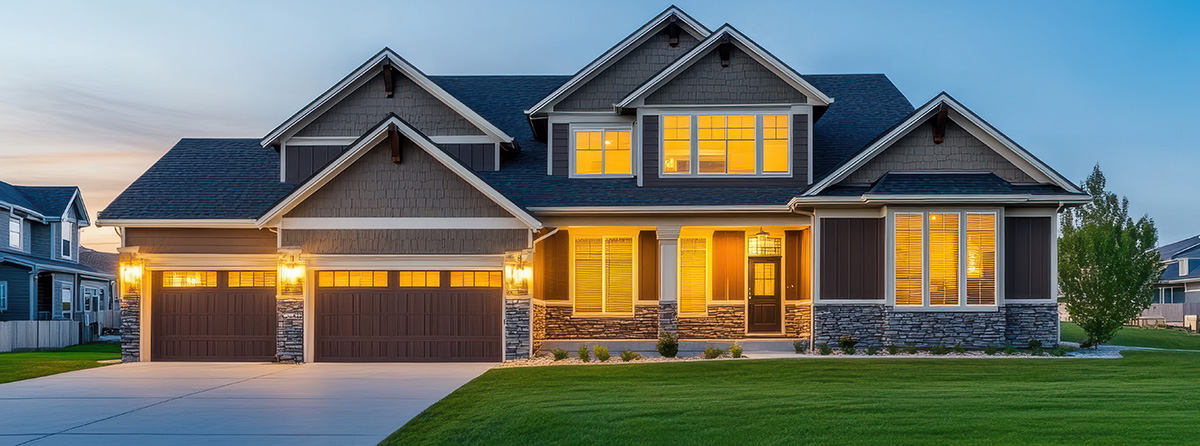
Get a free, no-obligation estimate from a crew that knows Colorado soil, Colorado weather, and how to finish concrete that lasts.
Accessibility
Adjust the site to fit how you read and browse. Your choices are saved on this device.