
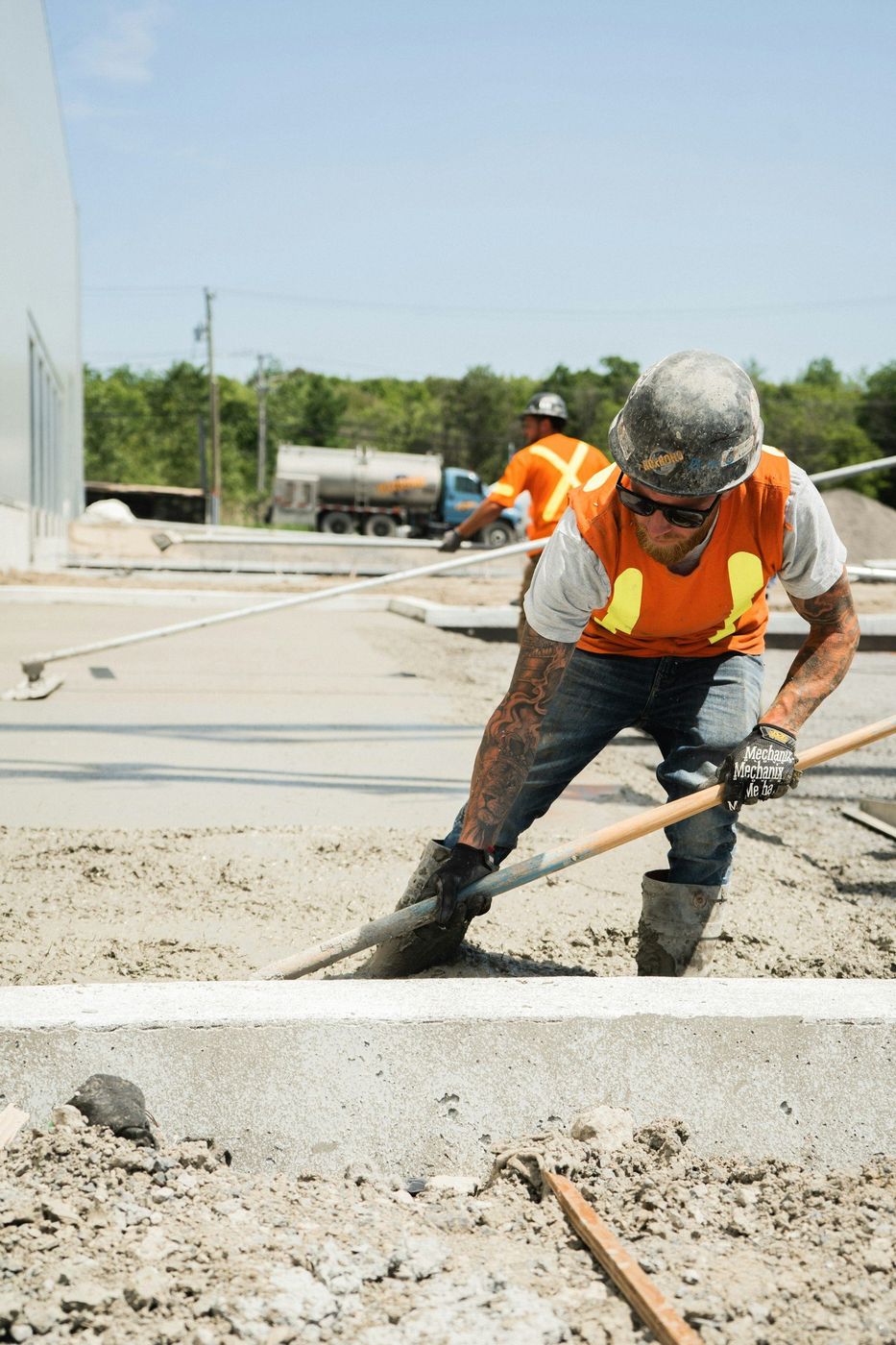
Shoot day is loud, fast, and over by afternoon. Everything before it decides how the shell turns out.
The day the concrete goes in, your back yard turns into a job site with a rhythm to it. A pump or a mixer parked at the curb, a hose running through the side yard, a nozzleman working the deep end with two people cutting and rodding right behind him, and a steady wall of noise from about eight in the morning. By mid afternoon there's a gray shell in the ground that looks close to a pool, and the crew is washing down.
People are usually surprised how quickly it happens after weeks of dirt and steel. That's the nature of it. The shell is placed in one continuous operation on purpose, because a cold joint in a water-holding structure is a leak waiting for a reason. Here's how the day runs and what has to be finished before we let a truck show up.
Excavation gets shaped to the design with the over-dig checked, because every inch of extra space becomes shell thickness and shell thickness becomes material. Then steel. A rebar cage tied in both directions, held off the soil on chairs and dobies so concrete gets completely around every bar, with extra bar where the engineer calls for it at the bond beam, the steps, and any raised wall. Our in-house structural engineer sizes that cage against the soil report and the pool's shape, and around here the report matters.
Plumbing goes in next and stays pressurized through the entire shoot. If a line takes a hit from a rod, we want to know that morning, not after the deck is poured over it. Skimmers and returns get blocked out, the hydrostatic relief valve is set in the floor, and the whole assembly gets walked before anyone mixes anything.
| Stage | What's happening | What it looks like from the patio |
|---|---|---|
| Floor | Nozzle work starts at the deep end and builds the floor to thickness | Steady noise, gray material building up, rebound being pulled clear constantly |
| Walls and bond beam | Shell brought up the walls in passes, with the beam at the top shot heavier | The pool shape suddenly reads as a pool |
| Rod and cut | Crew screeds walls to the steel, cuts the beam level, carves steps and benches | Two or three people on the shell with long tools, working fast |
| Finish and detail | Steps and swim-outs shaped, tile line trued, floor broomed for the plaster bond | The quiet part, and the part that decides how the pool feels underfoot |
| Wash down and haul | Overspray and rebound cleaned out, hoses pulled, site swept | Trucks leaving, and a wet gray shell in your yard |
| Cure begins | Water goes on the shell and keeps going on it for about a week | Somebody hosing down concrete every day, which is not optional |
Both methods make a solid pool and we build both. Spraying is what most residential shells get, because concrete placed at velocity against a steel cage follows a curved, sloped, irregular shape without anybody having to build formwork for it. Free-form pools with tanning ledges and carved steps are almost impossible to form economically. Sprayed material also goes in stiff and low in water content, which is part of why it performs.
Cast-in-place earns its place on straight-sided geometric pools, on shells that double as a structural retaining element, and on jobs where a formed finish is wanted. It's more formwork, more setup, and fewer crews do it well. On a Green Mountain slope, where a pool sits partly above grade with real lateral load on the downhill wall, our engineer sometimes lands there for good reason. Most of the time here, sprayed wins and the choice comes down to shape.
We'll look at your lot, your access, and your soil, then walk you through what the build actually involves before you commit to anything.
Still unsure about something?
Call the crew at (303) 569-4046 and we will talk it through.
Get a free, no-obligation estimate from a crew that knows Colorado soil, Colorado weather, and how to finish concrete that lasts.
Accessibility
Adjust the site to fit how you read and browse. Your choices are saved on this device.