
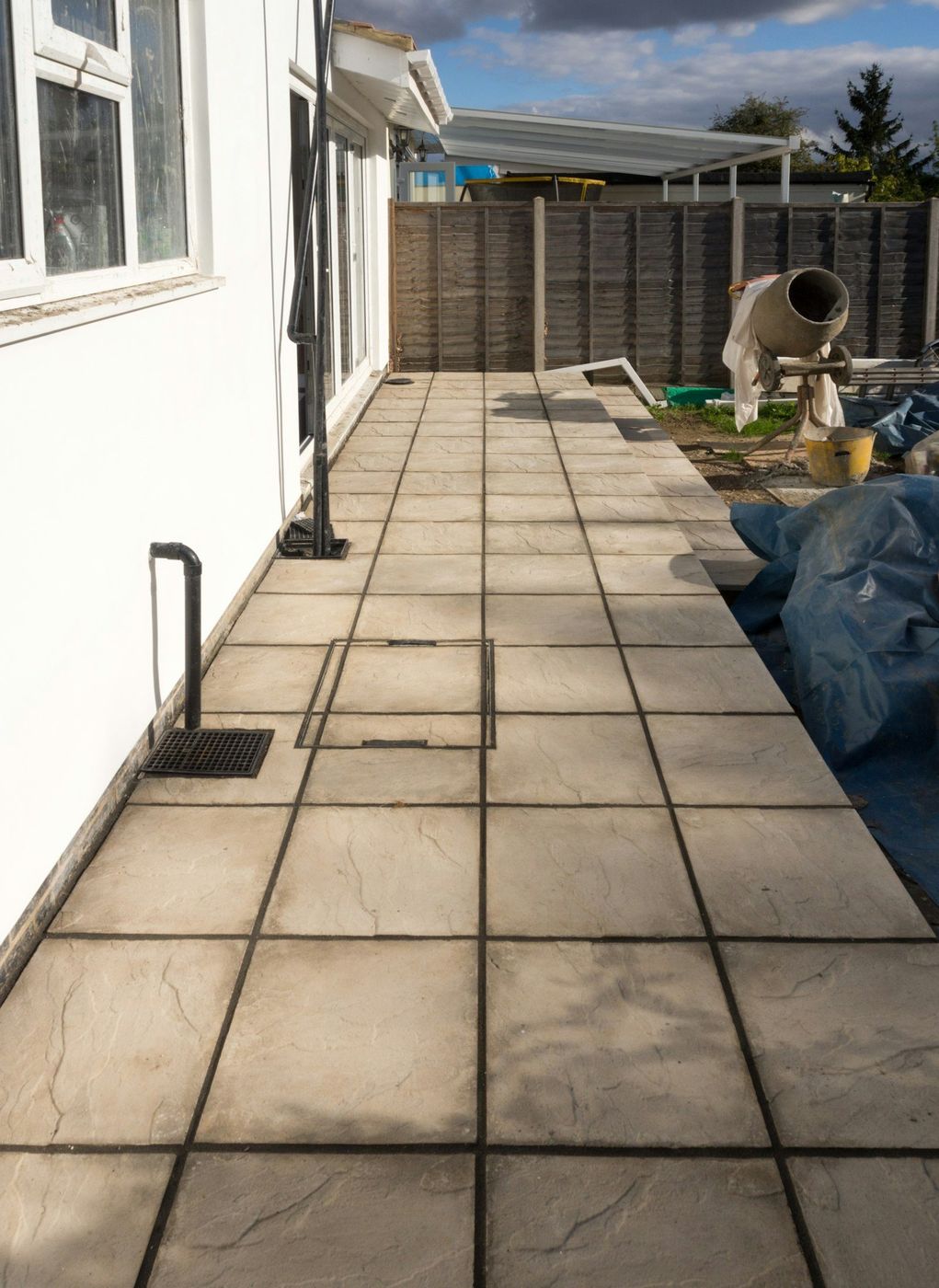
Go look at your slab an hour after a rain. It will tell you more about whether a topping will stick than any dry inspection can.
Water is the cheapest diagnostic tool you own, and almost nobody uses it. A dry slab hides its problems behind a uniform gray. Wet it down and the same concrete turns into a map: sound parts darken and dry back at the same rate, tired parts stay dark for hours, sealed parts refuse to wet at all, and anywhere water pools tells you the grade is off before we pull out a level.
That matters because an overlay borrows all of its structure from the slab underneath. Put one over concrete that's still doing its job and you get a fresh surface, a color you picked, and no dumpster in the driveway. Put one over concrete that's failing and you've spent good money laminating a problem.
Hose the surface down, then stand back for twenty minutes. Sound concrete goes uniformly dark and comes back uniformly light. What you want are the parts behaving differently from their neighbors. A patch that stays wet long after the rest has dried is losing its paste, and the sand underneath is holding water like a sponge. A section that never went dark still has sealer on it, which has to come off before anything will bond.
Then watch where the water goes. Puddles that sit for a day are the most common complaint we get, and they're also what an overlay is worst at fixing. A topping is a wearing surface, not a leveling course. If your patio drains back toward the house, the honest answer is that the concrete comes out and the grade gets rebuilt.
| What the water does | What is happening in the concrete | Overlay verdict |
|---|---|---|
| Darkens and dries evenly all over | Porous but intact paste, normal for unsealed concrete | Good candidate, proceed |
| Fine spiderweb lines show only while wet | Surface crazing from a fast finish years ago | Ideal candidate, a topping buries it |
| One area stays dark for hours | Paste has worn off and the sand beneath holds water | Workable if sound, we open it up and blend it in |
| Water beads or refuses to wet a section | Old sealer or a coating is still present | Must come off mechanically before we mix a thing |
| A crack darkens along its length and stays wet | Water is moving through the slab, not sitting on it | Deal with the crack and what is under it first |
| Water stands in a low spot past a day | Settlement, or a slab that was never sloped right | An overlay will not fix this, and we will say so |
| Runoff heads toward the foundation | Grade problem outside the slab | Fix drainage first, then talk about surfaces |
One wide shot and one close-up of the worst area usually tells us which way this goes. Free estimates, licensed and insured. Call (303) 569-4046.
Nothing about adhesion is chemical magic. Polymer-modified cement grabs texture, so we manufacture texture. A shot blaster throws steel at the surface and leaves it profiled like coarse sandpaper. Pressure washing gets a slab clean, which is not the same as getting it open, and a topping on clean-but-closed concrete releases in sheets the first time it freezes.
Thickness runs from a skim coat barely thicker than a business card up to a half inch for a stampable topping. Below an eighth of an inch you get color and a light texture and not much else. Past an inch you're pouring a thin slab that needs its own steel and joint plan, and at that point compare it honestly against replacement. Terminations matter as much as the number, since a topping that thins to a feather at the edge chips off with the first shovel.
Applewood and Belmar have a lot of concrete that's structurally fine and cosmetically finished: original patios, front walks, and porch landings poured well on undisturbed base that simply look their age. Those top beautifully. Green Mountain is a mixed bag, since a slab built into slope may have been fighting water at its uphill edge for decades, so we spend more time looking at roof drainage than at the concrete. Bear Creek adds trees, and a root under a walk is a hard no until it's dealt with. Solterra calls are usually builder-grade broom finishes somebody wants to look like something else.
The outdoor season is narrower than for regular concrete. We want surface temperatures above fifty and holding overnight, no rain in the window, and ideally not a bone-dry windy afternoon, since a thin layer with no mass flash-sets and skins before we can finish it. That puts us in May through early October. Interior overlays run year round.
Still unsure about something?
Call the crew at (303) 569-4046 and we will talk it through.
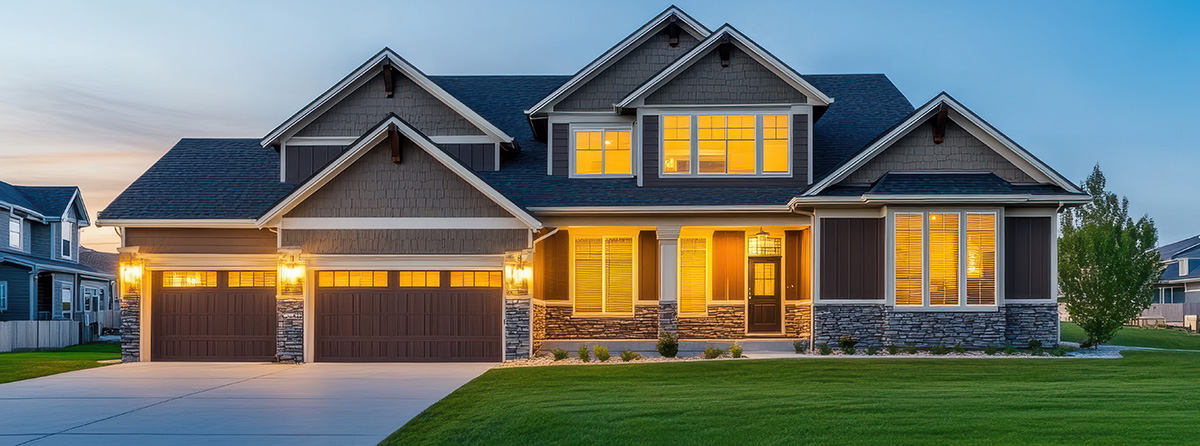
Get a free, no-obligation estimate from a crew that knows Colorado soil, Colorado weather, and how to finish concrete that lasts.
Accessibility
Adjust the site to fit how you read and browse. Your choices are saved on this device.