
The deck is only as honest as the backfill ring it's bridging.
Digging a pool doesn't just make a hole. It makes a ring. The excavator has to over-dig past the shell to give the crew room to work, and when the shell is done that whole donut of disturbed soil gets pushed back in. That ring is where pool decks fail, every time, and it's the reason the panel closest to the water is usually the one that dropped.
We build decks from the dirt up. Backfill placed in lifts and compacted rather than bulldozed in and rained on, base material that drains, steel that carries the slab across the soft zone, and drains that take water somewhere on purpose. Then we finish the surface for bare feet at 5,920 feet, where the sun is fierce and the surface temperature is not a small detail.
Native ground that's never been touched holds a slab fine. The trouble is the two or three feet of ground around your pool that was dug out, piled up, and put back. Loose fill settles for years, and it settles fastest when water gets into it. Between splash-out, rain running off the deck, and irrigation from the beds behind it, that ring stays wetter than anything else in the yard.
So we treat it like the structural problem it is. Backfill goes in in lifts with a compactor between each one, not in one shove from a skid steer. Where the void is deep or the schedule won't allow proper compaction, we bridge it: thicken the slab over the ring, run number four bar continuously across it, and let the concrete span the soft zone instead of relying on it. On older pools around Southridge and Westridge where the deck has already dropped an inch at the coping, we'll often lift the panels and then correct the drainage that caused it, because pouring new concrete over the same wet ring just resets the clock.
Every pool deck sheds water twice: once from the sky and once from the swimmers. Both need a destination. We pitch the deck away from the pool at an eighth to a quarter inch per foot so splash-out and rain move outward instead of carrying dirt and grass clippings back into the water. On decks hemmed in by a house, a retaining wall, or a raised bed, that slope has nowhere to end, and that's where a strip drain earns its keep. Set one at the low edge, pipe it in solid line to daylight, and the water leaves the deck and the backfill ring in one move.
Then there's the joint at the coping. Pool shell and deck slab are two different structures and they will move differently, so we hold an expansion joint between them, backer rod and flexible sealant, kept in good condition. That joint is the single most neglected item on every deck we inspect. Once it dries out and cracks open, surface water pours straight down behind the bond beam into exactly the soil you were trying to keep dry.
| Finish | Wet grip | Heat and upkeep |
|---|---|---|
| Medium broom | Very good, and it stays good as it wears | Cheapest to own. Light gray runs cooler than dark integral color. |
| Exposed aggregate | Excellent, the stone does the work | Wash timing on pour day decides how it looks. Reseal every two to three years. |
| Salt finish | Good, small pockets break the water film | Those pockets hold grit and can spall if deicers ever touch them. |
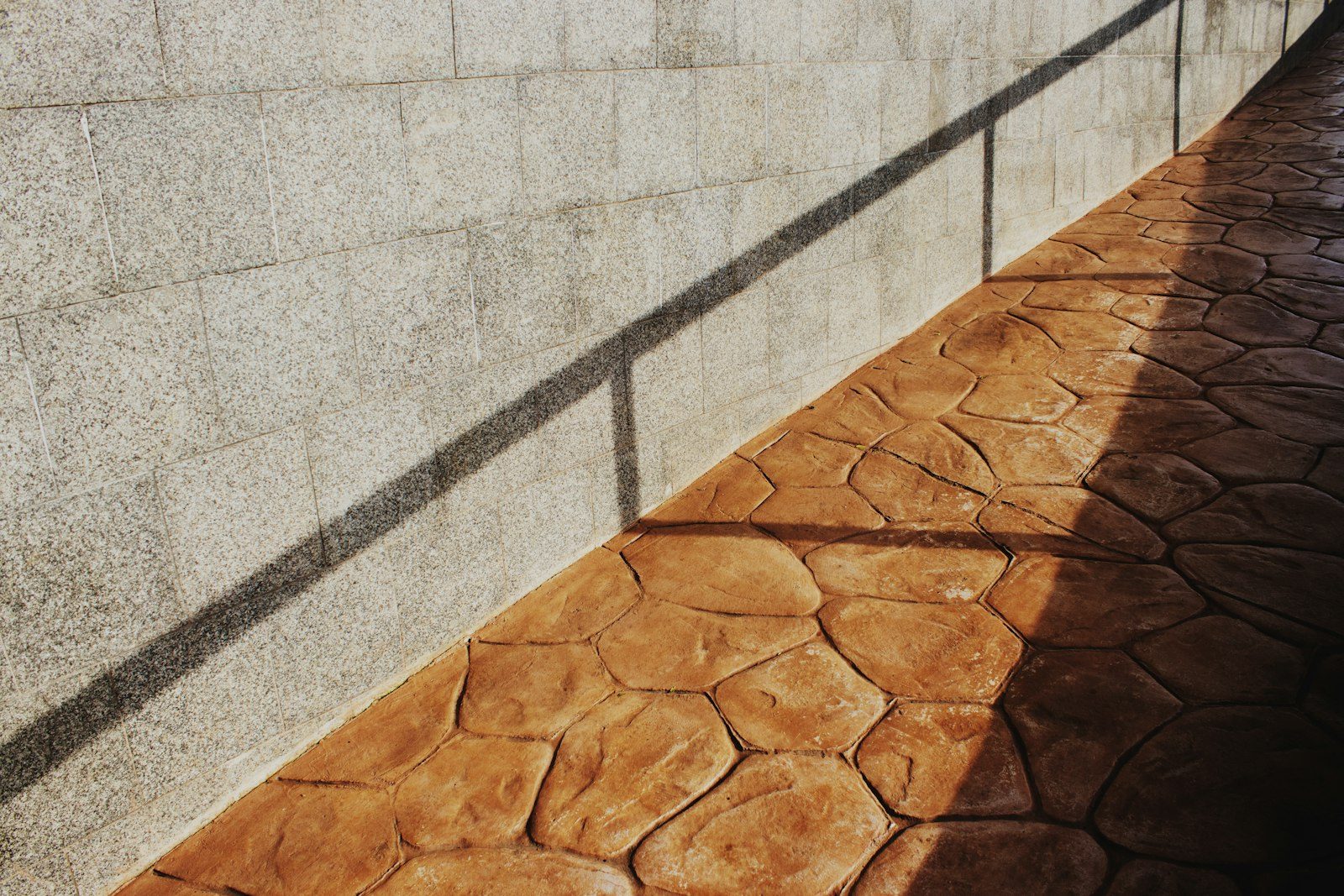
| Stamped with a texture skin | Depends entirely on the sealer used | Needs a grip additive in the sealer. Reseal on a two to three year cycle. |
| Textured overlay over sound concrete | Very good, and it can be tuned | Great for resurfacing an ugly deck. Needs a solid slab underneath to bond to. |
| Hard steel trowel | Poor. We don't do it around water | Cool and smooth to look at, and genuinely dangerous wet. |
Send a photo down the length of the joint. We'll say whether the answer is lifting, repouring, or fixing where the water goes.
Still unsure about something?
Call the crew at (303) 569-4046 and we will talk it through.

Get a free, no-obligation estimate from a crew that knows Colorado soil, Colorado weather, and how to finish concrete that lasts.
Accessibility
Adjust the site to fit how you read and browse. Your choices are saved on this device.