
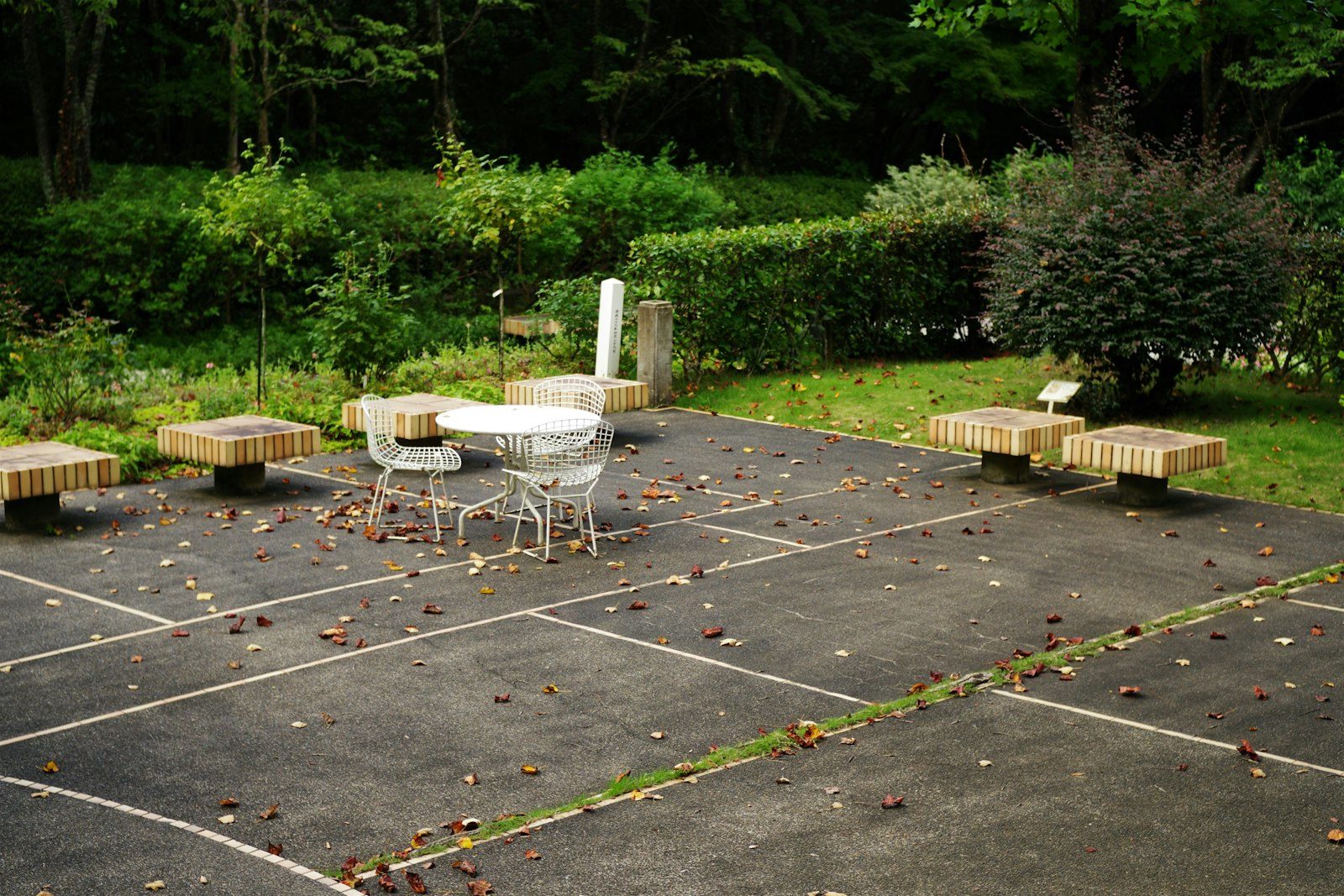
Six posts, four seasons of wind, and a shade structure that never once wobbles.
A pergola earns its keep in small daily ways. Coffee outside in July without squinting. Dinner on the patio while the afternoon storm finishes emptying itself out. String lights that stay up all summer, a shade sail through the hottest months, a swing that somebody's kid uses every single day until they outgrow it. None of that works if the posts move.
And post movement is what we get called about. A pergola that racks a little more each winter. A post base rusting where water has been sitting in the bracket for six years. Two columns that used to be plumb and now lean toward the fence. Every one of those is a footing problem, decided long before the lumber went up, and it's the cheapest part of the whole structure to get right the first time.
People size pergola footings for weight. Weight is the easy part; a wood shade structure barely presses on the ground at all. The load that actually tears them apart comes from underneath and above. Wind gets under a covered pergola and lifts, and the whole roof tries to leave with the posts still attached to it. Snow piled on a solid cover pushes the other direction. Frost grabs a shallow footing and jacks it up regardless of what the wind is doing.
That's why we go below the frost line even for a structure you could pick up with two friends. Depth is what anchors against uplift and heave, and diameter is what keeps the post from rotating in soft ground. On the open, windier lots out toward BackCountry and The Hearth we tend to go heavier on both, and we add hardware rated for tension rather than a bracket that just keeps the post from sliding sideways.
| Connection method | What it does well | The tradeoff |
|---|---|---|
| Post buried directly in the concrete | Maximum rigidity, nothing to loosen, cheapest to install | The wood sits in a wet pocket forever and rots from the bottom up |
| Wet-set anchor with a standoff base | Lifts the post off the concrete so it dries out, strong uplift resistance | Placement has to be exact while the concrete is plastic, so layout matters |
| Bolted base plate on a cured footing | Adjustable, forgiving of small layout errors, easy to replace later | Only as good as the anchors and the concrete edge distance they're set in |
| Embedded steel post sleeve | Serious rigidity for tall posts and heavy beams | Traps water inside the sleeve unless it's detailed to drain |
| Surface bracket epoxied into old patio concrete | Fast, no demolition, works when the slab is sound and thick | A thin or cracked slab gives the anchors nothing to hold, so we core and pour instead |
Send us the plan or the kit instructions and we'll set footings the builder can land on. (303) 569-4046.
The pattern here is predictable. People call in June wanting shade for July, and by then everybody else has called too. The smart move is fall or early spring. Footings poured in October are fully cured and waiting when the carpenter shows up in April, and you're not burning half of summer waiting on a schedule. Spring works fine once the ground has drained; saturated clay in early April makes a mess of clean holes.
Winter footing work is entirely doable for a project like this. The holes are small, the volume is low, and heated mix water with blankets over the caps handles the cold. Frozen surface crust slows the drilling, and we won't pour against a frozen bearing surface, but a mild January week gives us plenty of room. If you're planning a spring build in an older backyard around Northridge, Westridge, Eastridge, or Southridge, where mature trees complicate the layout, winter is a good time to locate roots and settle the post positions before anything gets ordered.
Still unsure about something?
Call the crew at (303) 569-4046 and we will talk it through.
Get a free, no-obligation estimate from a crew that knows Colorado soil, Colorado weather, and how to finish concrete that lasts.
Accessibility
Adjust the site to fit how you read and browse. Your choices are saved on this device.