
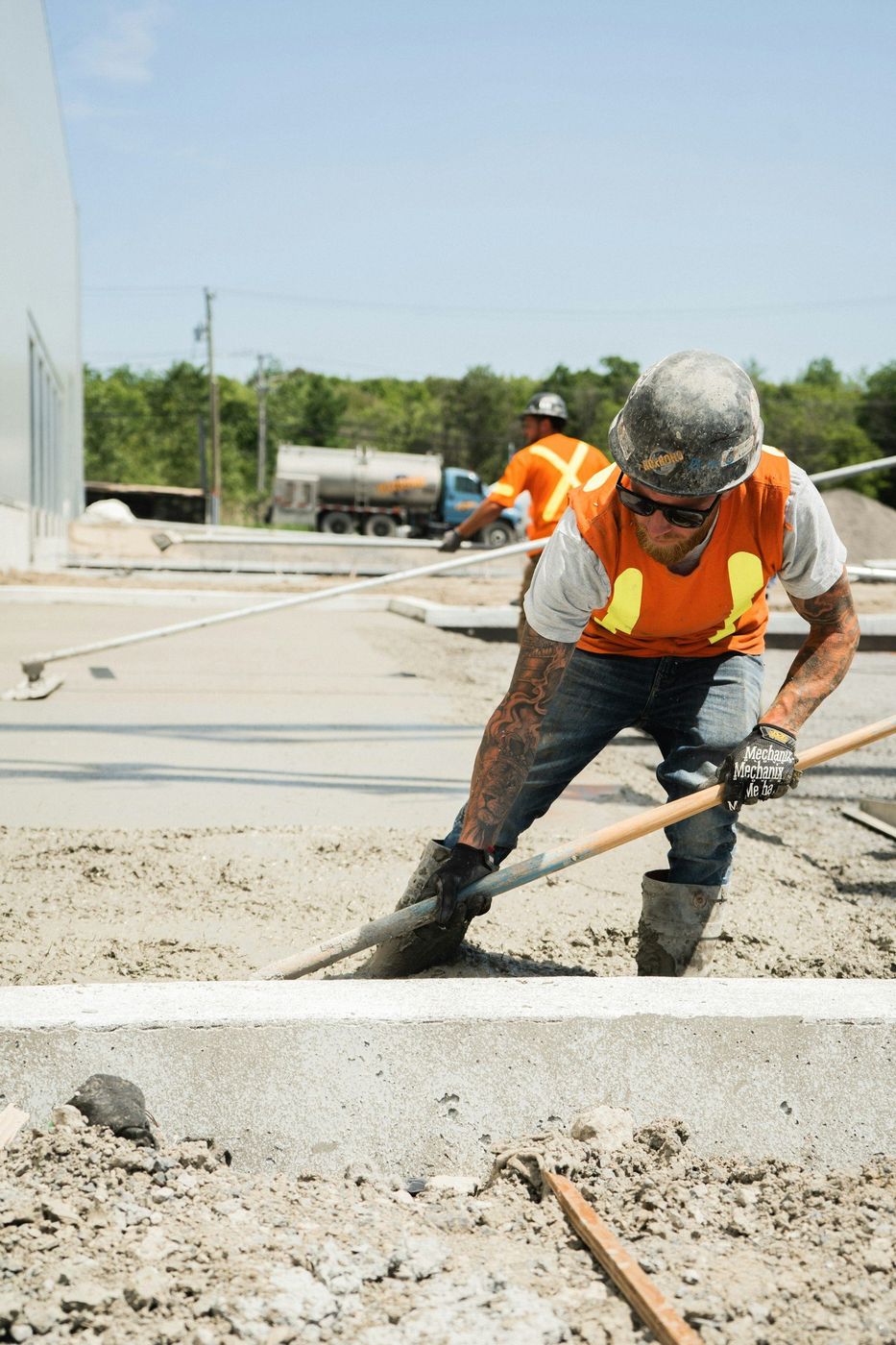
Engineered steel, a shot shell, and seven days of hose work before anybody talks about tile.
Shoot day starts before six. The nozzle crew is checking hose runs while the first truck is still on Broadway, and by the time sun clears the fence you're looking at a tied steel cage that resembles the skeleton of a boat. Eight hours later there's a pool. Not a swimming pool yet, but a shell you can walk down into, with steps carved by hand and a bond beam ready for coping.
That one day is where a concrete pool is won or lost. Everything before it is preparation and everything after it is finish work. We treat it accordingly, with our own structural engineer on the drawings, a plumbing test holding pressure the whole time, and a crew that doesn't leave until the shell has been cut, screeded, and set up for its first week of water.
The dig comes first, and it follows a sheet, not a feeling. Depths, bench locations, step risers, and the over-dig allowance are all drawn before the excavator shows up. On the newer builds out toward BackCountry we're often cutting into engineered fill, and on older Northridge lots we're working around mature trees and tight side yards, so access planning happens on the same drawing.
Then steel. Bar gets tied into a continuous cage across floor and walls, lapped where it should be, held off the subgrade on chairs so concrete can encase it from both sides. The bond beam gets its own bundle at the top. Plumbing rough-in goes in with the steel: main drains, returns, skimmers, and any water feature lines, all pressurized and left under pressure so a gauge is telling us the truth while the shell goes on. A pipe damaged during placement is a problem you want to find that morning, not the week you fill.
Last comes the inspection walk. Our engineer signs off on the cage, the depths get checked one more time, and the yard gets protected. If anything on that list isn't right, we don't call the truck.
A shot shell wants water for seven days. We hose it down several times a day, more when the wind picks up, and that isn't a formality. Our air is dry and our sun at 5,920 feet pulls moisture out of fresh concrete faster than most crews from lower elevations expect. A shell that dries too fast develops surface crazing and never reaches the strength on the drawing. So we keep it wet, and we ask homeowners to help on the days we're not there.
Season matters for the same reason. April into October is our window, with late spring and early fall the best of it. Summer shoots start early and we shade what we can, since a July afternoon with a breeze is a moisture thief. Winter is the hard no for the shell itself: you cannot cure properly against a frozen subgrade, and blankets over a bowl-shaped structure are a losing fight. What we do in winter is dig, engineer, and get everything permitted and staged so the first warm stretch belongs to you.
Winter is when the smart planning happens. Let's get the engineering and the dig scheduled now.
| Method | How it works | Where it fits |
|---|---|---|
| Wet-mix shotcrete | Ready-mix arrives batched, pumped through the hose, air added at the nozzle | Our default. Consistent water-cement ratio because the plant controlled it. |
| Dry-mix gunite | Dry material blown through the hose, water added by the nozzleman | Works well with a skilled operator. Quality rides on that one person's hands. |
| Cast-in-place in forms | Conventional forming, placing, and vibrating | Right for rectangular shapes, raised walls, and vanishing edges. |
| Curing demand | Wet cure seven days in all three cases | Nobody gets to skip this at our altitude and humidity. |
| Shaping freedom | Free-form curves and benches carved during placement | Shotcrete and gunite win outright. Forms are a straight-line tool. |
The shells that fail didn't fail on shoot day. They failed the week after, when nobody put water on them. We hand out a hose schedule and we mean it. Seven days of ten-minute soakings is the cheapest structural upgrade in the whole project.Straight from the crew
Still unsure about something?
Call the crew at (303) 569-4046 and we will talk it through.
Get a free, no-obligation estimate from a crew that knows Colorado soil, Colorado weather, and how to finish concrete that lasts.
Accessibility
Adjust the site to fit how you read and browse. Your choices are saved on this device.