
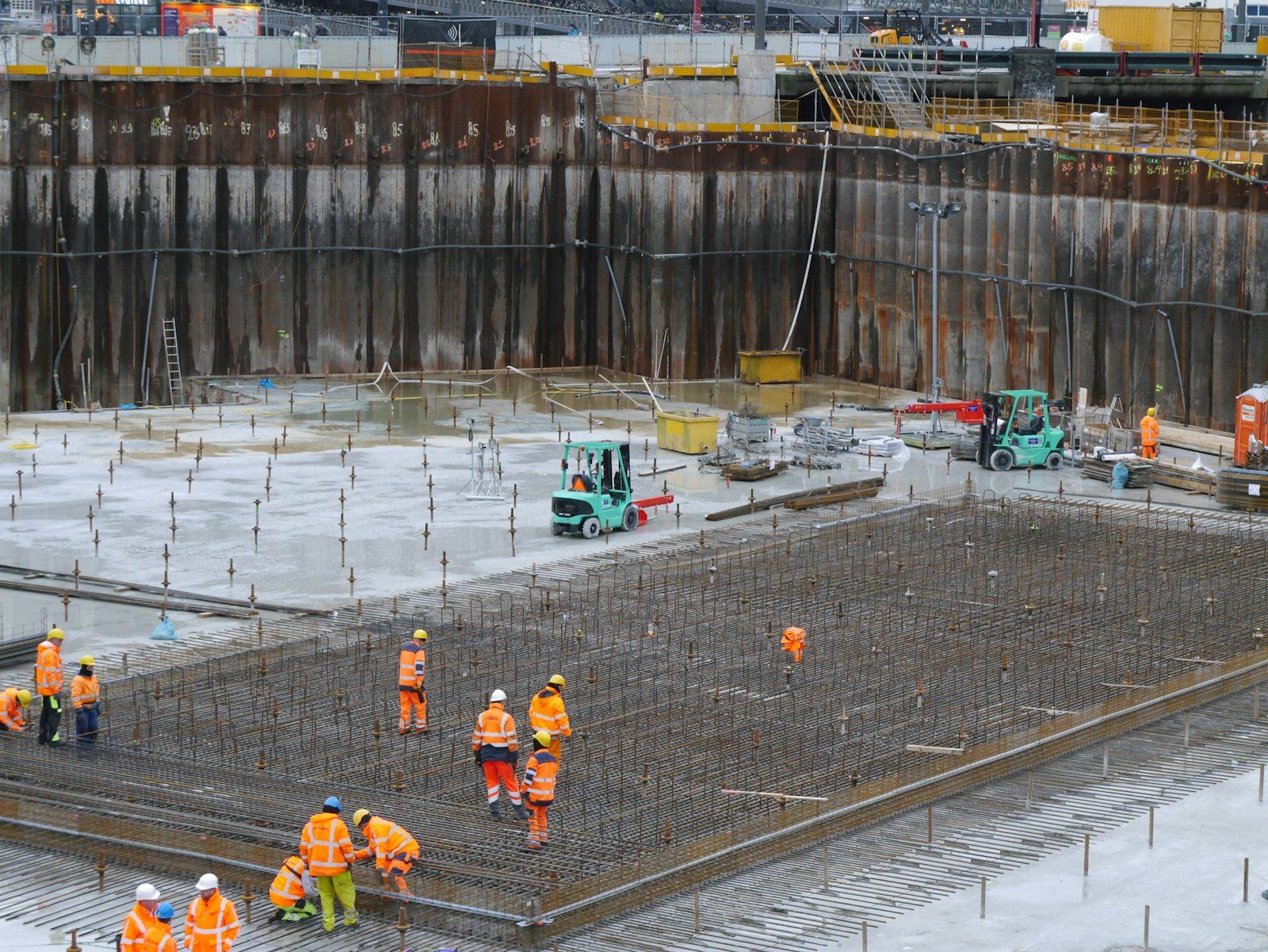
We start with what the ground under your slab has been doing, because that is usually the part that failed first.
Cracks get the phone call. The crack is almost never the thing that went wrong. On properties out here, with long drives, wide front walks, and irrigation running most of the summer, what gives out first is the few inches of dirt and rock holding the concrete up. Water finds a path, fines wash away, a hollow opens, and the slab does the only thing an unsupported slab can do.
So we start underneath. We sound panels with a hammer, probe the joints, look at where your downspouts land, and work out where the ground is going before anybody quotes a patch. Fill the crack and leave the void and you have bought two seasons. Maybe three. Fix the reason and the repair stops being a line item you pay every few years.
Concrete is strong in compression and weak in tension. Almost everything that goes wrong with flatwork traces back to that one sentence. While the ground presses back evenly across the whole underside, the slab just sits there doing its job. Take away support beneath one corner and the concrete has to span the gap on its own. It can't. So it breaks, and it breaks at the weakest line it can find.
Under a walk or a drive here we expect compacted road base over native soil. What we often find is a thin skim of gravel, or nothing, with concrete cast straight onto graded dirt. Add twenty years of sprinkler cycles and spring runoff and those fines migrate somewhere else. Now the panel is bridging air. Tap it with a hammer and you'll hear it. A supported slab thuds. A hollow one rings, and that sound is most of the diagnosis in about four seconds.
| Water source | What it does below the slab | What has to change |
|---|---|---|
| A lawn head spraying the slab edge | Keeps the first foot of subgrade wet from April to October, so it never firms up | Rotate the head or swap the nozzle before we patch anything |
| Drip line weeping beside a walk | Slow, steady, invisible. Carries fines away one season at a time | Move the emitter, then fill the hollow it left behind |
| Downspout landing at a slab corner | Concentrates a roof's worth of runoff into one square yard of dirt | Extension or a buried line that carries it well past the concrete |
| Grade that fell back toward the house | Runs storm water along the foundation and in under the slab edge | Regrade while the concrete is open, not the following spring |
| Sump discharge looping back on itself | Puts the same water under the same panel every time the pump kicks on | Run the line farther out and daylight it downhill |
| Snowmelt off a wide roof valley | Refreezes under the panel and lifts it, then leaves a gap on the thaw | Gutter work plus grade. Concrete by itself won't win that fight |
April through October is the easy answer, and September may be the single best month for it. Nights cool down, patch material stops flashing off in an hour, and the work gets a real cure behind it before the first shovel and the first bag of ice melt come out.
Winter isn't a flat no. Crack routing and joint work happen in the cold with materials rated for it. What we won't do is set a structural patch on frozen subgrade, because that ground drops when it thaws and takes the repair down with it. There's a diagnostic reason to wait, too. Soil tells the truth differently wet and dry, and a February walk with everything locked up solid reads better than the site actually is. Call in December anyway. We'll look, knock down anything that's a trip hazard, and put you near the top of the spring board.
Text us a photo of the crack and a second one of where your downspout lands. We'll tell you which we'd deal with first.
Half the repairs we quote out here come with a sprinkler conversation. People are proud of the lawn and we get that. But if a head soaks the same two feet of subgrade every morning at five, that panel keeps dropping no matter how good the patch is.Our crew lead, after the walkthrough
Still unsure about something?
Call the crew at (303) 569-4046 and we will talk it through.

Get a free, no-obligation estimate from a crew that knows Colorado soil, Colorado weather, and how to finish concrete that lasts.
Accessibility
Adjust the site to fit how you read and browse. Your choices are saved on this device.