
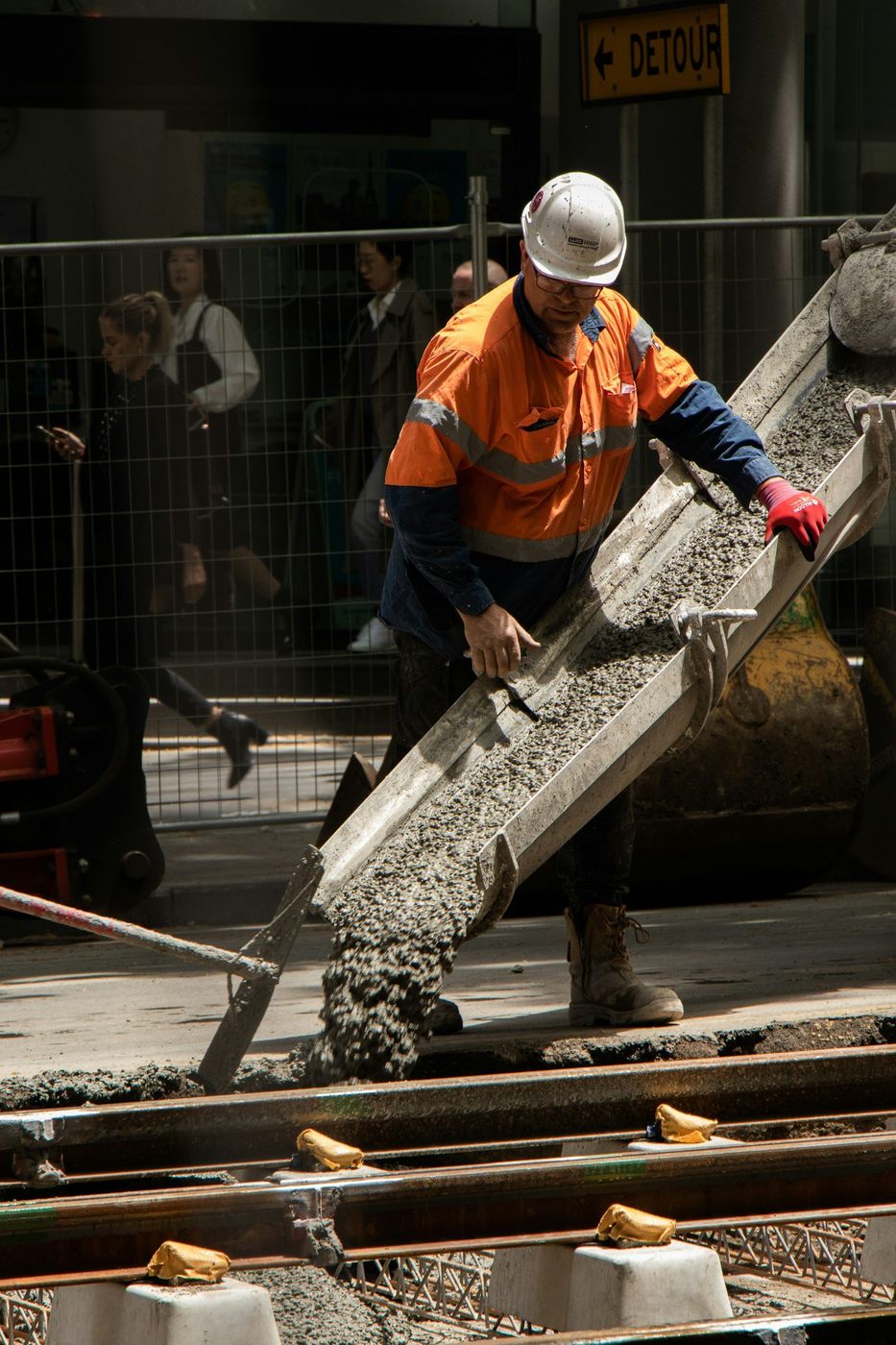
Six inches of reinforced concrete is the easy half. The compacted rock underneath is what keeps a filled spa sitting dead level in year eight.
A filled spa is one of the heaviest things most people will ever set in a backyard, and unlike a car it never moves. Same square feet of dirt, carrying the same thousands of pounds, every hour of every day for as long as you own it. Concrete handles that easily. Soil is the one that gets tired, and soil is what almost every tilted spa in this town is actually complaining about.
So when we quote a pad here, most of the conversation happens below the surface. What's the native ground where you want it. How much organic material has to come out. Where does the roof dump water, and does that path cross the spot you picked. Get the answers right and the slab on top is honestly routine work: rebar, a good mix, a flat float finish, done in a morning. Get them wrong and no amount of thickness saves you.
| Layer | What goes in | What happens if it's skipped |
|---|---|---|
| Native subgrade | Topsoil and organics stripped out down to firm ground | Buried organic material rots and compresses, and one corner drops |
| Proof roll and correction | Soft spots dug out and replaced with compacted material | The pad bridges a soft pocket until the day it stops bridging it |
| Aggregate base | Road base placed in lifts and compacted, not dumped | Loose rock consolidates under load and the spa settles unevenly |
| Drainage path | Grade shaped to carry water away before concrete goes down | Water collects under the pad, freezes, and lifts one edge each winter |
| Conduit and sleeves | Electrical run sleeved through before the pour | Somebody cores a finished slab, or runs it above ground where the shovel finds it |
| Steel | Number four bar on chairs, tied on a tight grid | Cracks that would have stayed hairline open up and step |
| Slab and finish | Air-entrained mix, screeded flat, floated for a level plane | A spa that reads out of level on the cabinet before the first year is out |
Spa loads are concentrated. Most cabinets carry weight down through a perimeter frame and a few internal supports, so the pressure lands in narrow bands rather than spreading evenly across the slab. So a spa pad gets built stiffer than a patio of the same size: thicker section, tighter steel, base compacted in layers.
Ground moisture is the variable that gets people. Around Old Town, older yards have decades of garden beds, buried debris, and settled trenches within a few feet of the house, and that's usually exactly where somebody wants the spa: close to the back door, short run to the panel. Out in newer areas like Rigden Farm and The Landing, the trouble is usually engineered fill that hasn't finished consolidating. Same result if you pour on it without checking.
Water is the accelerant either way. A downspout landing near the pad edge, an irrigation zone that overshoots the patio, or splash from the spa itself all soak the base. Wet fill under a concentrated load moves. We shape drainage away from the slab, keep the pad a touch above the surrounding grade, and get the roof water discharged well past it before we ever call for concrete.
We'll probe it, look at your roof drainage, and tell you what has to come out before anything gets poured.
May through September is the comfortable window, and early fall might be better still: mild days, cool nights, and a slab that's at full strength before the first hard freeze. The pad has to be cured and sound before a filled spa lands on it, so build backward from your delivery date. Seven days before anybody sets a tub on it, twenty-eight days before you stop thinking about it entirely.
Winter pours are possible and we do them, with heated mix water, non-chloride accelerators, and insulated blankets held down tight against the wind that comes off the plains. The rule we won't bend is frozen ground. Concrete placed over frost sits on something that isn't there in April, and a spa pad is the last slab on your property you want playing that game. If the base is frozen, we prep now and pour when the ground opens.
After the pour, treat that first winter carefully. No deicers around the pad, and specifically no magnesium chloride on the walk leading up to it, because whatever you spread there tracks over. Sand handles traction.
The dig tells us everything. We stripped a spot behind a house last spring and found a foot and a half of soft garden soil where the homeowner assumed there was ground you could build on. That's the difference between a pad that stays flat and a spa somebody shims every other summer.From the crew lead on these jobs
Still unsure about something?
Call the crew at (303) 569-4046 and we will talk it through.

Get a free, no-obligation estimate from a crew that knows Colorado soil, Colorado weather, and how to finish concrete that lasts.
Accessibility
Adjust the site to fit how you read and browse. Your choices are saved on this device.