
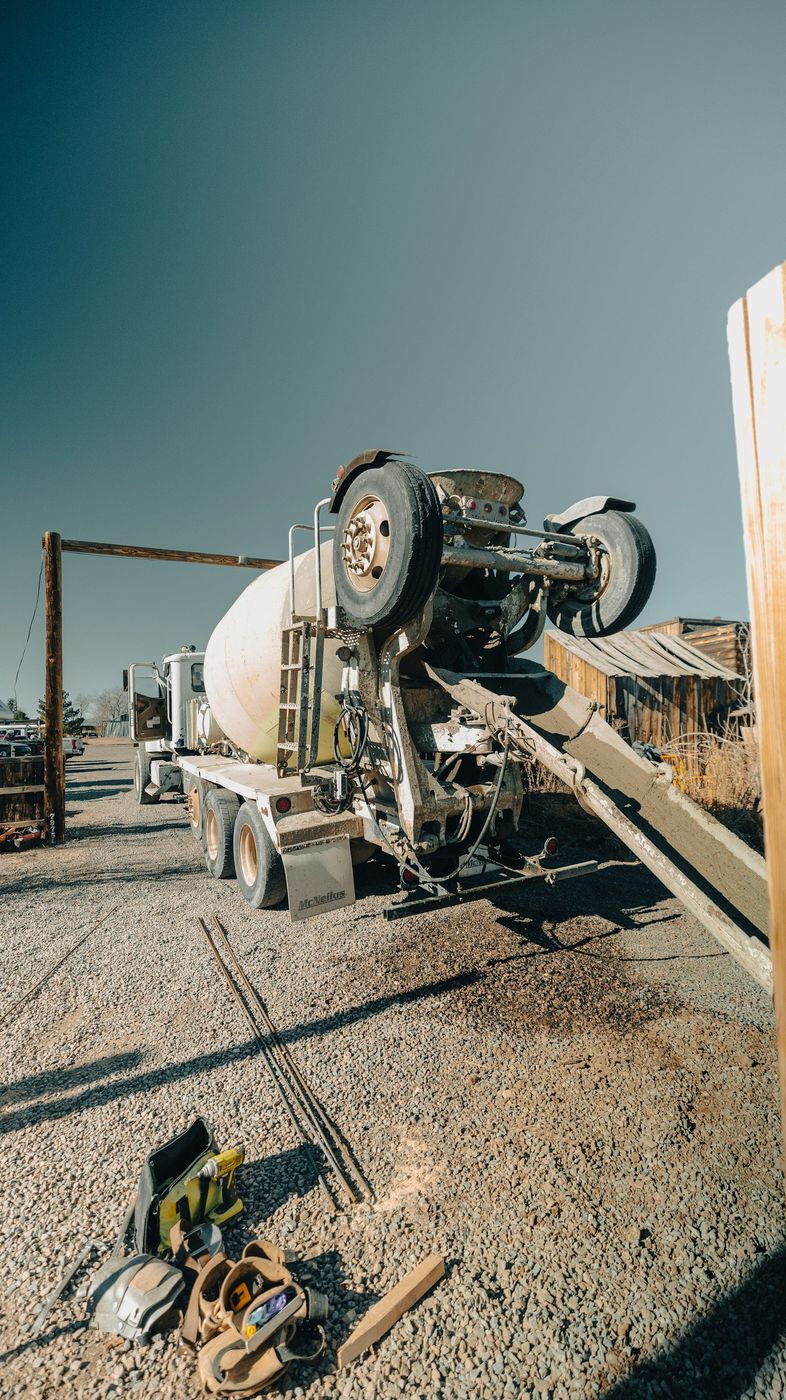
The concrete takes twenty minutes. The three hours around it are the actual job.
A couple of yards of concrete, sometimes less. Placing it takes about as long as it takes to describe. Everything that decides whether the machine sits dead level, whether the conduit comes up where your electrician wants it, and whether the anchor bolts line up with the holes in a steel base, happens in the three hours wrapped around those twenty minutes.
We pour pads across Fort Collins for condensers and heat pumps, standby generators, transformers, propane tanks, and light commercial equipment, from side yards in older neighborhoods off Old Town to new mechanical yards out along Harmony. Small pour, zero slack. And in a town that spends a serious portion of the year below freezing, the pad under the machine you care about most in January earns the same morning as anything bigger.
Layout comes first and it comes off paper, not off a guess. The equipment submittal gives us the footprint, the anchor pattern, the clearances the manufacturer wants around it, and where the conduit or the gas line enters. We string that on the ground and then argue with it: can a technician actually stand there, does the service door still swing, is the pad clear of the drip line off the roof, and does snow slide onto that spot every February.
Then the ground work. We dig past the topsoil and anything soft, bring the hole back up with base rock in shallow lifts, and compact each one. That step is where a pad tilts or holds. Forms get set square and checked with a laser, the isolation joint goes in against any structure the pad touches, steel gets tied on chairs, and the electrician's stub-ups get braced so they stand exactly where they belong when concrete pushes against them.
| What gets done | When it happens | The cost of missing it |
|---|---|---|
| Screed and level check | Immediately after placing, before bleed water shows up | A machine shimmed for its entire life, and a manufacturer pointing at the pad |
| Anchor bolts or a template | Set into wet concrete, held by a jig rather than by eye | Drilling and epoxying anchors later, hoping to miss the reinforcing steel |
| Conduit alignment | Braced beforehand, then checked again during placement | A stub leaning into the equipment footprint, found on install day |
| Edge tooling | Once the surface firms up enough to hold a shape | Sharp corners that chip and then spall through the first winter |
| Surface texture | After bleed water is gone, before the surface gets stiff | A slick pad in the exact spot a technician has to stand |
| Isolation joint at the house | Formed before the pour, never sawed in afterward | Two slabs locked together, cracking where they try to move apart |
Send us the equipment submittal and your installer's date. We'll tell you straight whether it fits. (303) 569-4046.
Small placements lose heat fast, which makes them fussier in the cold than a big slab. There isn't much mass in a couple of yards, so the concrete doesn't generate the warmth that carries a larger pour through a cold night. We use heated batch water and a non-chloride accelerator, we don't place on frozen ground, and we blanket the pad and leave it covered longer than people expect. Done that way, a January pad is entirely normal work here.
Summer flips the problem. A small pour on a hot, windy afternoon can stiffen before there's time to finish it properly, so we schedule pads early in the day from June through August. Whichever season it goes in, keep the first winter clean: shovel snow off it instead of chipping ice, and keep deicing chemicals away from concrete that hasn't had a year to mature. Sand for grip does the job with no downside.
Still unsure about something?
Call the crew at (303) 569-4046 and we will talk it through.

Get a free, no-obligation estimate from a crew that knows Colorado soil, Colorado weather, and how to finish concrete that lasts.
Accessibility
Adjust the site to fit how you read and browse. Your choices are saved on this device.