
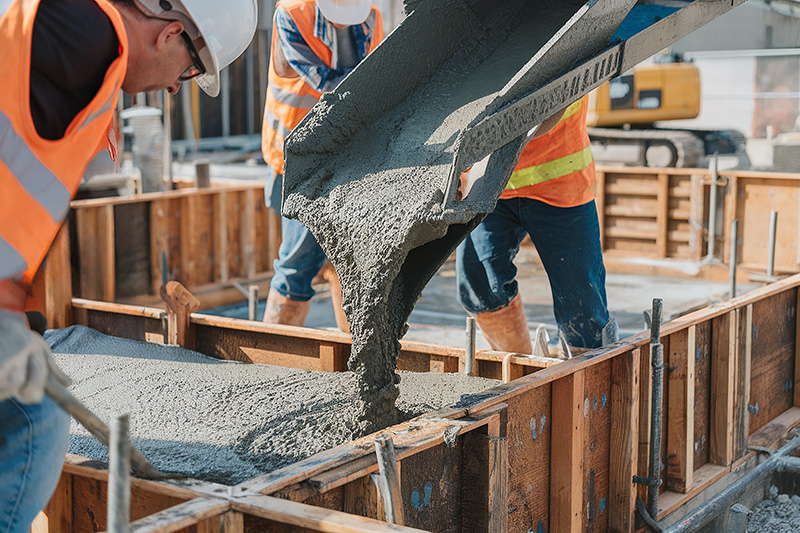
The load-bearing base for decks, additions, and structures.
Footings and piers are the part of a project nobody sees and everybody depends on. They carry the weight of a deck, an addition, a pergola, or an outbuilding down through loose topsoil and into firm, stable ground below the frost line. Get them right and the structure above stays put for decades. Get them shallow or undersized and the first hard Front Range winter starts pushing them around, and everything bolted on top moves with them.
On Colorado's expansive clay, this matters more than most people realize. When that soil takes on water and freezes, it swells and lifts. A footing that does not reach below the frost depth becomes a lever for that movement, and you end up with a sloping deck, cracked siding, or doors that no longer latch on a new room. We pour footings and piers sized to the load and set deep enough to stay below the frost line, so the ground can heave all it wants and your structure does not feel it.
Industrial loads and residential clay both show up here. We size each pour to what it carries and the ground it sits on. For footings & piers, that local knowledge is exactly what protects your investment. We plan the base, drainage, reinforcement, and finish around the conditions on your Commerce City property, not a generic detail.
We serve every part of Commerce City and the surrounding area, including Reunion, The Villages at Buffalo Run, River Run. Wherever you are in Adams County, the crew shows up with the same standard.
At roughly 5,160 feet, Commerce City gets intense high-altitude sun and a freeze and thaw cycle that is hard on any concrete poured without care. For footings & piers, that means air-entrained mixes, deliberate curing, control joints cut on time, and a base prepared for the expansive clay under your property. It is the difference between work that holds for decades and work that starts failing by the first or second spring.
The single most important number on a footing is how deep it goes. Across the Front Range, the frost line runs deeper than a lot of homeowners expect, and the exact depth your jurisdiction requires depends on where you are between Colorado Springs and Fort Collins. The idea is simple. Water in the soil freezes from the top down. If the bottom of your pier sits above that freeze depth, the expanding frozen soil grabs it and pushes it up. If the pier reaches into ground that never freezes, there is nothing to lift it. We dig to the required depth, confirm it before any concrete goes in, and pour so the bearing surface sits on soil that stays stable year round. That one detail separates a footing that lasts from one that moves every spring.
A footing has two jobs: reach stable ground and spread the weight out so the soil can carry it. A tall deck with a hot tub on it loads its posts far harder than a garden pergola, and the footing under each has to match. We size the diameter and the bearing area to the load coming down the post and to what the soil underneath can actually support. On weak or highly expansive clay, that can mean a wider footing, a deeper pour, or a connection to engineered piers like helical or caisson systems. For jobs that need a stamped design, we have a structural engineer on staff who works from the soil conditions and the load, not a guess. The goal is a base that does not punch into the ground or settle unevenly under the structure it holds.
This is the honest concern, and it deserves a straight answer. Plenty of decks and outbuildings around the metro were set on shallow footings, surface blocks, or piers poured a foot or two down because that was faster and cheaper. On our clay, those move. So if you have watched a deck rise and tilt over a few winters, you have a real reason to be skeptical. Here is how we prevent it. We pour below frost depth so freeze cannot grab the footing. We bear on soil that can actually carry the load, not loose backfill. Where the clay is aggressive, we add depth, widen the base, or move to an engineered pier. And we keep water away from the footing with grading and drainage where the site allows, because saturated clay is what makes the heave worse. We cannot stop Colorado soil from swelling, but we can build so your structure does not ride along with it.
A perfect footing is wasted if the post base lands in the wrong spot or sits crooked. The connection between concrete and framing is where loads transfer and where water likes to sit and rot a post, so we treat it as part of the pour, not an afterthought. We set anchor bolts and post bases to the layout, plumb and at the right height, and on the better details we keep the post up off the concrete so it sheds water instead of wicking it. For caps over helical or caisson piers, we tie the cap to the pier so the whole assembly works as one unit. Square, level, and accurately placed anchors mean the framer above can build true without fighting a base that is off by an inch.
Every Commerce City job starts with a free, written estimate and a structural engineer on staff for the work that needs one. Licensed, bonded, and insured, with finishes from a clean broom texture to stamped, colored, and sealed.
You always know what is happening and what it costs before we mix a single yard. Here is the path from first call to final walkthrough.
We visit the site, measure, check drainage and soil, and hand you a clear written quote. No charge, no pressure.
We set the grade, thickness, reinforcement, and finish. Structural work gets engineered and permitted.
Forms, rebar, and a clean pour. We screed, float, and finish to the texture you picked, then cut control joints.
You can walk it in 24 to 48 hours. We walk the job with you and explain how to care for it through the first winter.
Still unsure about something?
Call the crew at (303) 569-4046 and we will talk it through.
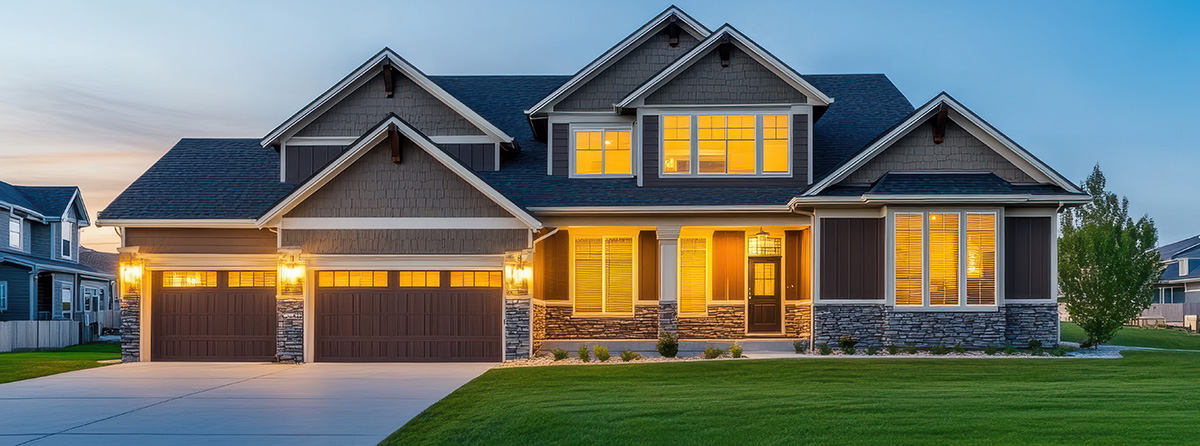
Get a free, no-obligation estimate from a crew that knows Colorado soil, Colorado weather, and how to finish concrete that lasts.
Accessibility
Adjust the site to fit how you read and browse. Your choices are saved on this device.