
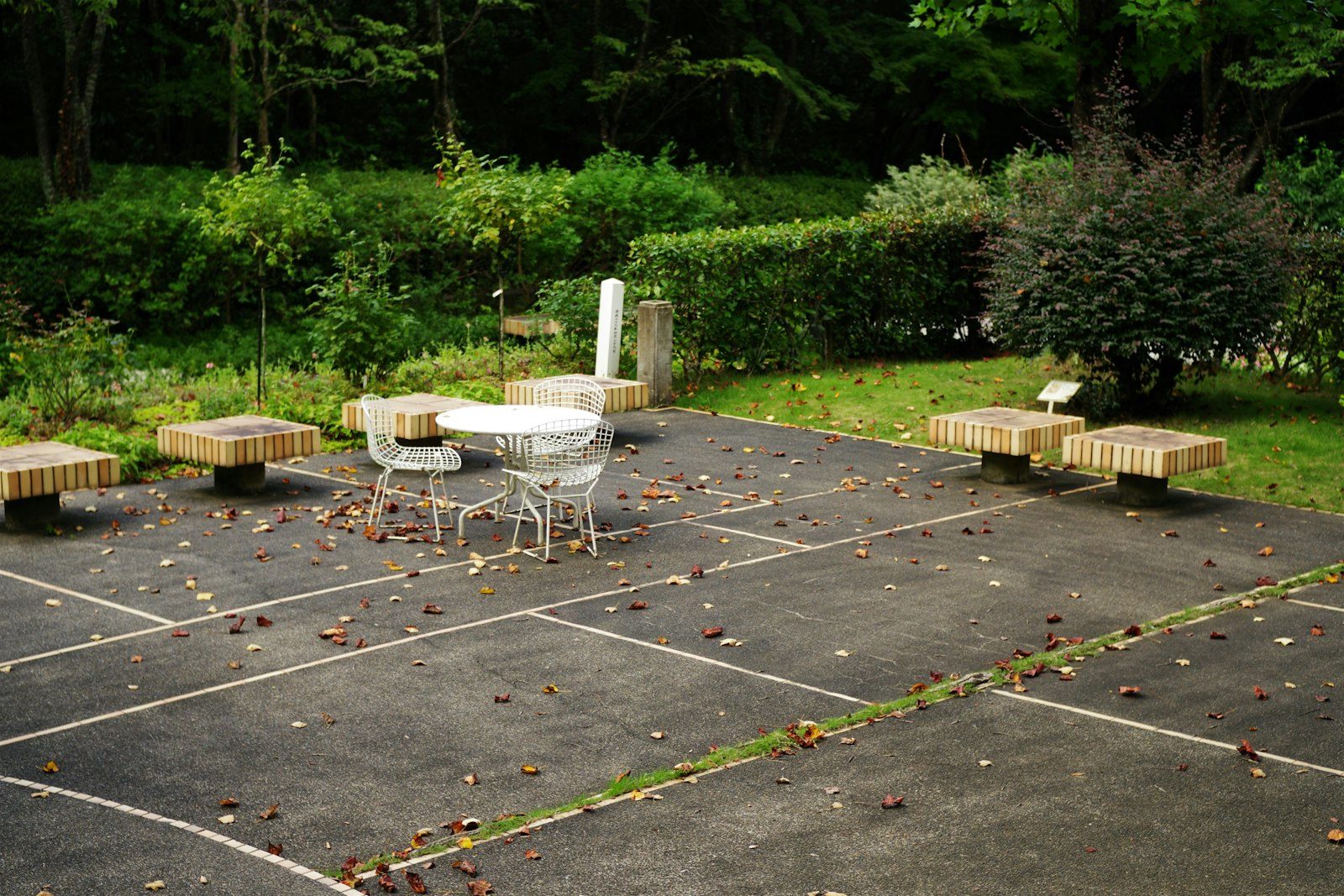
Three months it's a wet floor for bare feet. The other nine it's a patio you cross in boots.
Swim season here is short and the deck works all year anyway. From Memorial Day to Labor Day it does the job everybody designs for: wet feet at speed, towels, coolers, kids cutting the corner between the steps and the gate. Then the cover goes on and that same concrete spends nine months as a walkway to the shed, a place the patio furniture lives, and the surface somebody has to shovel in January.
We build for both jobs. Traction that works when it's soaking, a surface that stays crossable in July sun at 5,833 feet, slope that carries water away from the shell instead of back into it, and a joint at the coping you can actually service. Pools in Willow Creek and Foxridge back yards mostly sit on decks poured a long time ago, and the failures we see are always the same short list.
Ask what wrecks a pool deck around here and most people say chlorine. It isn't. It's winter, and specifically what gets put down to melt ice on a surface people still have to walk across. Deicers are hard on concrete and brutal on a deck that stays damp, and magnesium chloride is the worst of them. Sand does the same job and does nothing to the surface.
Snow removal is the other off-season habit worth getting right. Plastic shovel, skidded rather than chopped, because a steel edge finds every joint lip. If furniture stays out through the winter, put pads under it. Metal legs sitting in one wet spot for five months leave rust marks that don't wash off.
And walk the deck once in April. Meltwater shows you every low spot and every joint that's opened up. Ten minutes catches problems while they're cheap.
| Part of the deck | What it does all day | What we build into it |
|---|---|---|
| The strip right at the coping | Wet constantly, walked on constantly, bare feet | Maximum traction, a serviceable expansion joint, and fall running away from the water |
| Furniture and lounge area | Chairs dragged across it, towels left to dry | A texture that hides wear, lighter color to hold the temperature down |
| Steps and the entry path | The wettest travel route on the property | Grippiest finish on the job, consistent rise and run, no low spot at the bottom |
| Equipment side | Service access, dripping, chemical handling | Drainage away from the pad, wide enough to kneel and work |
| The shaded run against the house | Stays damp, freezes first, thaws last | Extra slope, a drain if water dead-ends, no deicers ever |
| Transition out to lawn | Where the deck water is meant to end up | An edge set at grade so runoff leaves instead of undercutting the slab |
Watch anybody get out of a pool. They don't stroll. They come up the steps and go straight for a towel or a chair, and they do it on wet feet on a surface tilted somewhere. That's the design condition. A medium broom finish handles it well and keeps handling it as it wears, which is why we pour so many of them. Exposed aggregate is even better underfoot and looks like more money.
Sealer is where good decks turn slick. A film-forming sealer on a deck with no grip additive in it is genuinely unsafe wet, and we won't put one down that way. If you want the color depth a sealer gives, we mix in a traction additive. If you'd rather not think about it, a penetrating sealer leaves the texture alone entirely.
Heat is the other half. Sun at this elevation cooks a dark surface, and a saturated color plus an August afternoon makes a deck people hop across. Lighter shades stay usable. We show samples outdoors in full sun, which is the only comparison that means anything.
Photos of the joint line and the low spot tell us most of it. Call and we'll say whether it's a repair, a lift, or a repour.
The pool shell and the deck slab are two separate structures and they move independently. Always. So there's an expansion joint between them, backer rod with a flexible sealant on top, and that joint is the most neglected item on every deck we look at. When it hardens, shrinks, and pulls open, surface water runs straight down behind the coping into the backfill around the shell. That's how decks start dropping at the edge.
Check it every spring and plan on resealing every few years. Maintenance, not a defect.
For new work, May through September is the window, and honestly the best pours happen in early fall when days are warm and nights are cool. Summer storms are what we watch. A downpour during finishing costs you the top of the slab, in scaling and dust a year later, so we postpone rather than gamble. Give a new deck a week before furniture and heavy use, and hold off on deicers through the entire first winter.
Still unsure about something?
Call the crew at (303) 569-4046 and we will talk it through.
Get a free, no-obligation estimate from a crew that knows Colorado soil, Colorado weather, and how to finish concrete that lasts.
Accessibility
Adjust the site to fit how you read and browse. Your choices are saved on this device.