
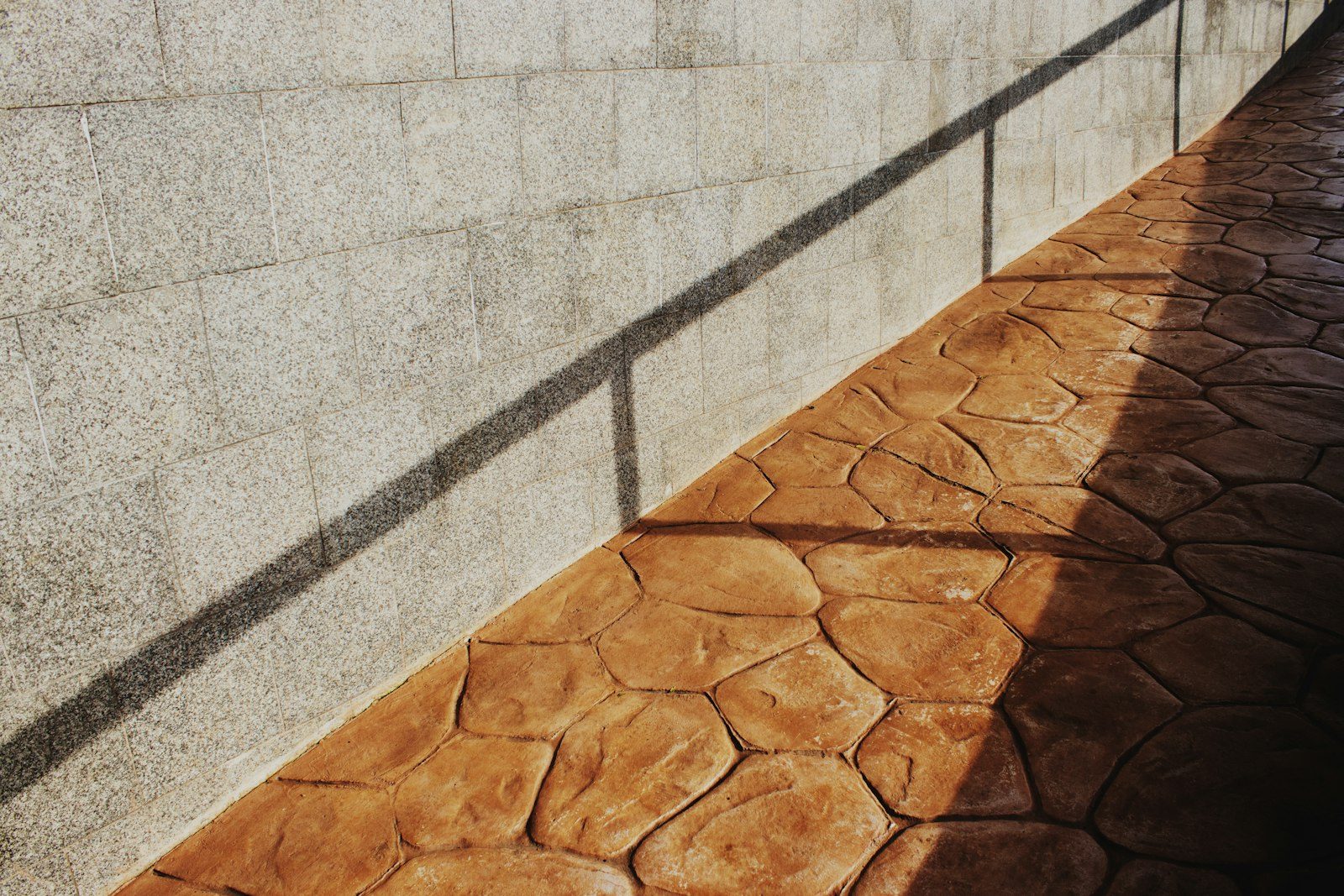
Decks that stay grippy when wet, stay tolerable barefoot, and move water away from the coping.
Think about how a pool deck gets used on an actual July Saturday. Kids run on it, wet, at speed, in bare feet. Somebody drags a cooler across it. A wet towel sits in one spot for four hours. Chlorinated water splashes out at the same three places all afternoon, and around six o'clock the whole surface has soaked up enough high-altitude sun that nobody can cross it without hopping.
That's the design brief. Not what it looks like in a photo, what it does under that kind of traffic. We build pool decks in Red Hawk, Crystal Valley, and Cobblestone Ranch, and the ones that hold up were designed around grip, temperature, and drainage before anybody picked a color.
Slip resistance comes from texture, and texture is a choice you make on pour day. A hard-troweled surface looks great and turns into a hazard the moment it's wet, so we don't put one around water. A medium broom finish gives you real traction that doesn't wear off, because the grip is built into the concrete rather than sprayed on top of it. Decorative finishes can work too, provided we put a grit additive in the sealer and keep up with resealing.
Heat is the underrated one at six thousand feet. Sun intensity here is higher than most people expect, and surface color drives how hot a deck gets. Light gray and buff-toned concrete stay noticeably cooler than dark charcoal stain. If you want a dark deck, we'll pour it, and we'll also suggest keeping the darkest color away from the main traffic lanes where feet actually land.
Then drainage, and this is where builder decks fail most often. Water has to leave the deck, not run back toward the coping and not pool at the house. We slope roughly a quarter inch per foot away from the pool, and where the yard won't take the runoff we set deck drains into the slab and pipe them out. A deck that sheds water also sheds the freeze damage that comes with standing water in November.
| Finish | Traction when wet | Barefoot heat | Upkeep |
|---|---|---|---|
| Medium broom | Best in the group, and permanent | Middling, and light gray helps a lot | Seal occasionally. That's about it. |
| Exposed aggregate | Very good, texture is in the stone | Depends on the rock; lighter runs cooler | Rinse it, reseal on schedule |
| Stamped with texture skin | Good only with grit added to the sealer | Warmer, especially in deeper colors | Reseal every two to three years, no skipping |
| Hard trowel | Poor. We won't do it around a pool. | Hot and glary | Low, until somebody falls |
| Salt finish | Good, the small pockets hold grip | Middling | Pockets collect grit, so blow it off |
| Bonded textured overlay | Good while the sealer is intact | Varies with the color chosen | Sealer is the entire lifespan |
Send photos from two angles plus one of the coping joint. We can usually tell whether resurfacing solves it or whether the slab has to come out.
Pool chemistry is hard on concrete. Splash-out carries chlorine and whatever else is in the water onto the same edge of the deck every day, and over years that leaves the surface etched and thirsty. Sealer is the defense. Penetrating sealer for broom-finished decks, and a film-forming product with grit for anything decorative. Two to three years is the cadence up here, shorter than the label usually claims, because our sun does more damage than the label anticipates.
Winter is the other half of it. Once the pool closes, the deck still catches snow, and the temptation is to salt it like a driveway. Don't. Magnesium chloride is brutal on concrete, and it's especially bad on a deck already stressed by chemical exposure. Shovel with a plastic-edged blade, use sand for traction, and keep drains clear so meltwater has somewhere to go instead of freezing in the low spots.
For scheduling, late spring through early fall is our pouring range, and we like getting deck work done in May so the surface has cured and been sealed before the pool is in heavy use. Fall works too if you're planning ahead for next season, and honestly it's the smarter booking. Everybody calls in June wanting a deck by the Fourth of July.
Half the deck repairs we look at trace back to one missing joint at the coping. Deck moves, shell doesn't, and something has to give. It's always the concrete, and it always cracks in the same place.From the crew lead on these jobs
Still unsure about something?
Call the crew at (303) 569-4046 and we will talk it through.
Get a free, no-obligation estimate from a crew that knows Colorado soil, Colorado weather, and how to finish concrete that lasts.
Accessibility
Adjust the site to fit how you read and browse. Your choices are saved on this device.