
Engineered shotcrete shells, and a straight answer about the old one you already have.
You can read a failing pool from the patio door. Rust bleeding through the plaster in a vertical streak means the steel underneath is corroding. A waterline that drops an inch a week when nobody has been swimming means the shell or the plumbing is losing water somewhere. Coping stones that have separated from the deck, a tile band with a stair-step crack running through it, a deck panel that has pulled away and left a dark gap: those are structural messages, not cosmetic ones.
We build and repair concrete shells around Sapphire Pointe, Castlewood Ranch, and Metzler Ranch, and roughly half our pool calls start with somebody describing one of those symptoms. So before we talk about building, let's talk about reading what's already in your yard.
Rust staining is the one to take seriously. Reinforcing steel expands as it corrodes, and expanding steel inside a shell pushes the concrete apart from the inside. By the time the stain is visible on the plaster, the process has been running for a while. That usually means cover was thin somewhere, either the cage sat too close to the surface or the shotcrete never fully consolidated behind it.
Movement cracks read differently. They follow a line, they often run diagonally from a corner, and they get wider at one end. Those come from soil, and around here soil is the whole story. A shell is a rigid bowl buried in ground that changes volume with moisture. Build it without an engineer sizing the steel and the wall thickness for that condition and the ground eventually wins.
Then there's the boring failure that gets blamed on the shell unfairly. Water loss through a return line, a skimmer throat, or a light niche looks exactly like a leaking shell from the deck. We pressure-test the lines before anyone recommends demolition, because tearing out a sound pool over a bad fitting is an expensive mistake.
We'll test the lines before we talk about the shell. It's the cheaper answer more often than people expect.
The order matters and it's worth understanding. We excavate to the design profile, then plumbing goes in and gets pressure tested while everything is still visible. Steel comes next, a cage tied on a grid with the bar spacing and wall thickness coming off engineered drawings rather than habit. Chairs and dobies hold the cage off the dirt so concrete can get all the way behind it. That last detail is the one that separates a thirty-year shell from a fifteen-year one.
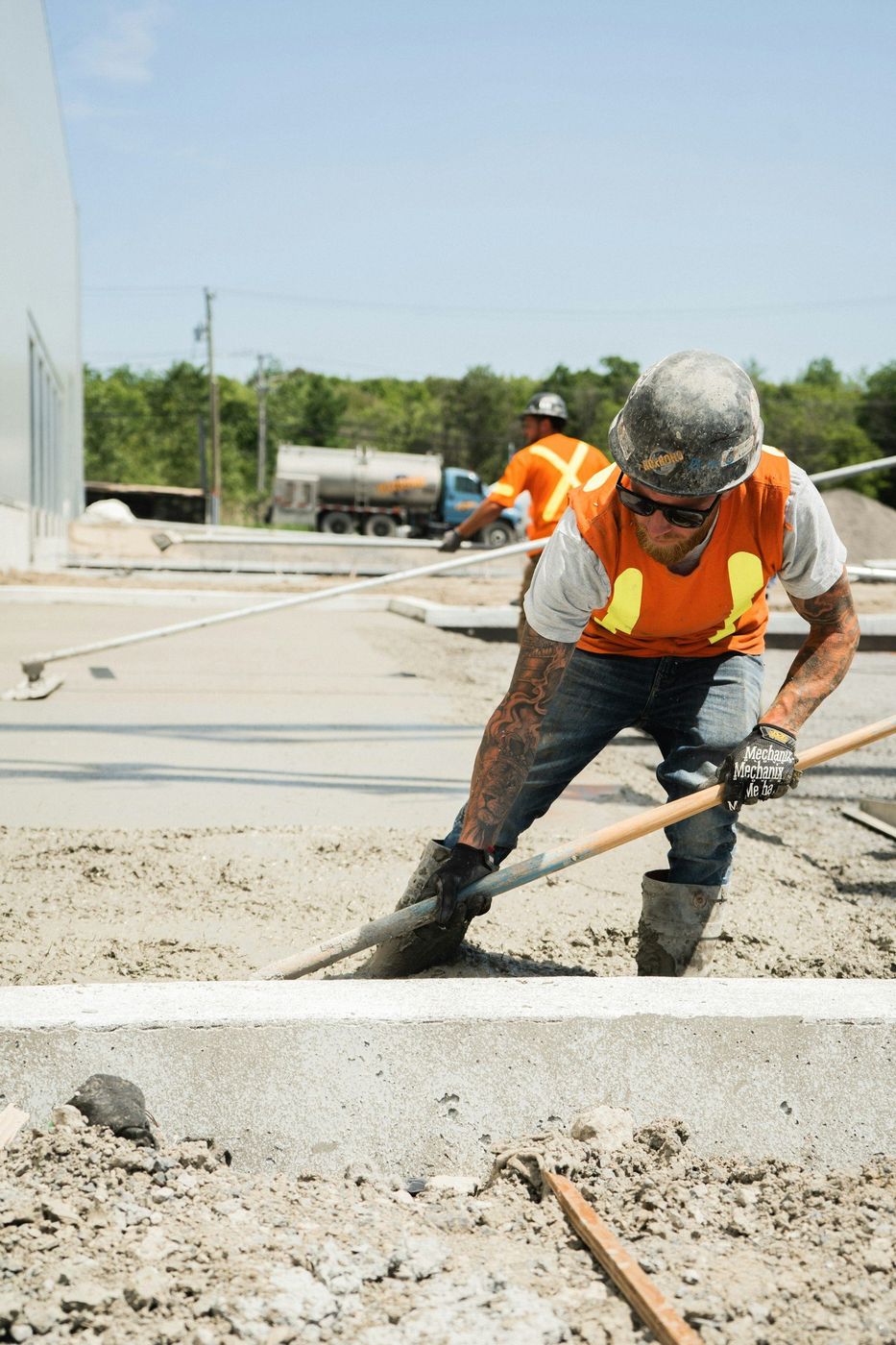
Then shotcrete day. Material is pumped through a hose and shot against the steel at high velocity, which is how you get concrete to consolidate into a curved vertical wall with no forms. The nozzle operator is the most important person on that site. They control the angle, the distance, and whether shadowed pockets form behind the bar. We keep a crew member cutting and screeding right behind the nozzle to hold the profile true.
After that, the shell gets water-cured for days. Not sprayed once and forgotten. A shotcrete shell that dries too fast in Colorado air develops shrinkage cracking, and that's a self-inflicted wound at this altitude where humidity is low and the sun is relentless.
| Method | How it goes in | Where it fits |
|---|---|---|
| Wet-mix shotcrete | Mixed at the plant, pumped, shot against the cage | Most residential shells we build. Consistency is controlled off site. |
| Dry-mix gunite | Dry material hydrated at the nozzle tip | Same family. Water control moves to the operator's hands. |
| Cast in place with forms | Formed and poured like a set of walls | Straight-sided lap pools, plunge pools, and sharp architectural shapes. |
| Precast shell set by crane | Built off site and lowered in | Fast, but only where a crane can reach the excavation. |
| Vinyl liner over poured floor | Wall panels with a concrete floor beneath a liner | Lower entry cost. The liner is a wear item you'll replace. |
You can tell how a shell was shot ten years later. Sound the walls with a hammer and the hollow spots are where material never got behind the bar. That's where the rust starts, every single time.The crew lead's read on it
Still unsure about something?
Call the crew at (303) 569-4046 and we will talk it through.

Get a free, no-obligation estimate from a crew that knows Colorado soil, Colorado weather, and how to finish concrete that lasts.
Accessibility
Adjust the site to fit how you read and browse. Your choices are saved on this device.