
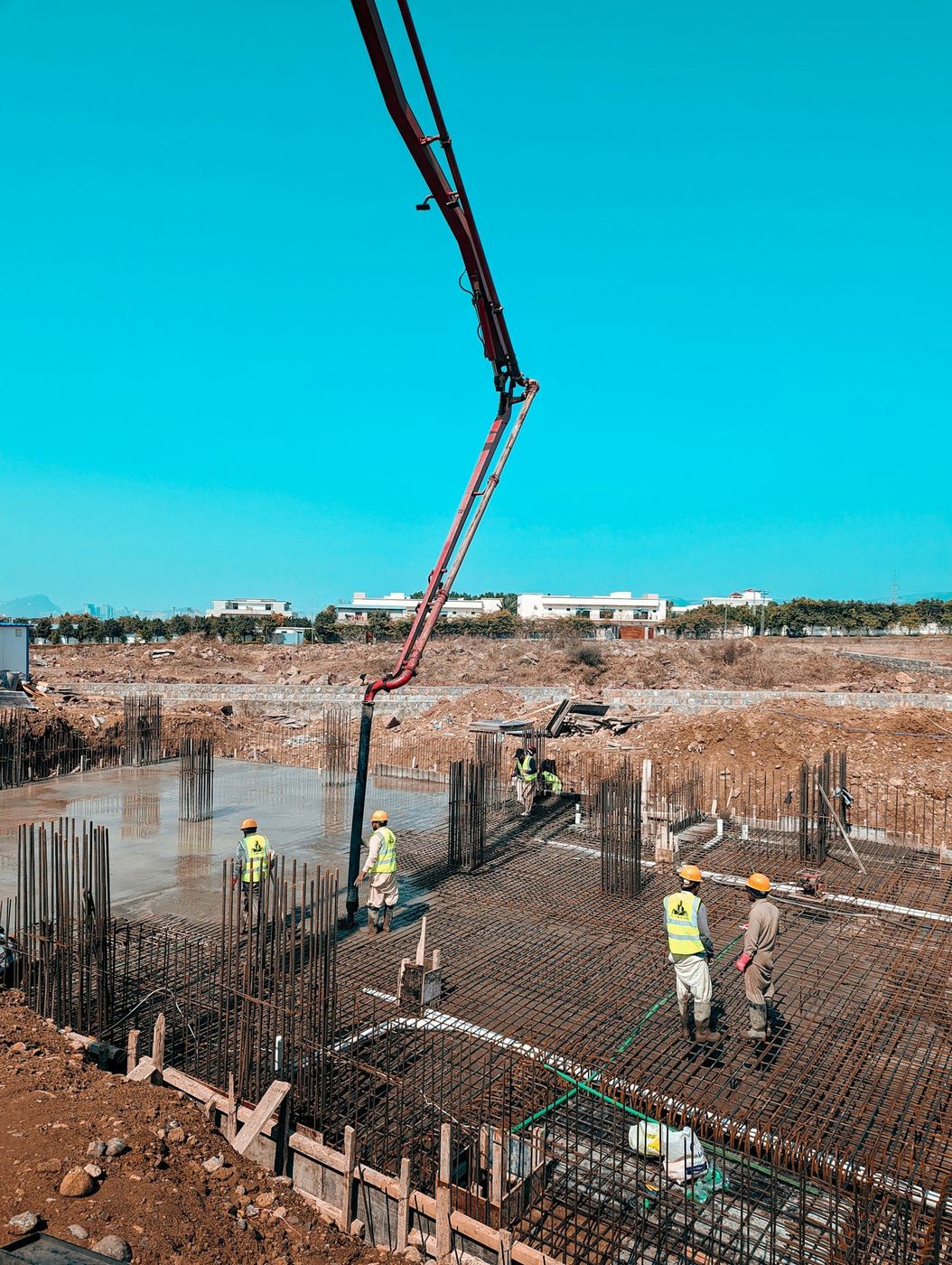
An in-house structural engineer, not a salesman with a crack chart.
Foundation trouble introduces itself politely. A door that suddenly needs a shoulder in August. A crack above the garage that wasn't in last summer's photos. A gap opening where the back patio meets the wall. None of it looks urgent, and most of it isn't, yet. The question worth answering is which of those small signals is seasonal clay movement passing through, and which is the start of real settlement.
We answer it with an engineer instead of a sales script. Go Denver Concrete keeps a structural engineer on staff, so the person deciding whether your Castle Pines home needs piers, drainage correction, or just a patch and a photo log is someone whose job is being right, not closing.
Stand across the street and look. Rooflines should run straight; a dip over one corner points at that corner's footing. Brick and stone veneer crack in a stair-step pattern when a foundation drops, following the mortar joints like a staircase. Door and window frames rack out of square, which is why the sticking bedroom door and the diagonal drywall crack in the same corner are usually one story, not two separate ones.
Inside, the floors talk. A marble rolls to the same wall every time. Trim gaps open near the ceiling. Caulk splits where the backsplash meets the wall. Any one of these alone is a house being a house. A cluster of them, on one side, getting worse: that's a pattern worth an engineer's hour.
| The crack | Usual verdict | Why |
|---|---|---|
| Hairline and vertical in a poured wall | Relax | Shrinkage from the original cure; seal it against water and move on |
| Stair-step through block or veneer | Investigate | The classic signature of differential settlement; the pattern maps where the footing moved |
| Horizontal across a basement wall | Take it seriously now | Lateral soil pressure is winning, and this one never improves on its own |
| Diagonal off door and window corners | Watch and measure | Stress shows up at openings first; movement may still be active |
| Anything wider than it was last season | Make the call | Growth means the cause is still working; documentation beats memory |
Two forces, and Castle Pines gets extra helpings of both. The first is expansive clay, the Douglas County standard, which swells when it soaks and shrinks hard in drought, cycling a foundation through pressure changes year after year. The second is slope. This town is built on wooded hills, and lots in Daniels Gate, Castle Pines North, and The Village at Castle Pines collect and route water in ways a flat suburb never has to think about. Water is the trigger. When it concentrates against one side of a foundation, the clay there swells while the dry side doesn't, and the structure gets twisted between the two.
Which is why a lot of our foundation calls end in drainage work instead of piers. Extend the downspouts, regrade the flowerbed that tilts toward the house, cut off the water, and the movement often just stops. The fix should only be as dramatic as the cause.
Text us a photo with something in it for scale. Our engineer looks at every one, and the first opinion costs nothing.
Cosmetic repairs on a moving foundation are rented, not owned. Epoxy in a crack that's still growing just hands it a new place to open. So sequence matters. First, stop the water. Then measure: if readings hold steady through a wet spring and a dry August, the movement has been arrested and cosmetic work will finally stick.
But when a footing has genuinely settled, steel piers driven down to load-bearing strata are the honest fix. They carry the house's weight past the clay entirely, and they can often lift a settled section back toward level in the process. It's the biggest hammer we own, and because our engineer earns nothing extra by recommending it, we only swing it when the numbers say so.
Season rarely blocks this work. Foundation crews dig and drive piers through winter, and cracks don't wait for June. If anything, evaluating a house across a wet-to-dry seasonal swing tells the engineer more than any single visit could.
The pattern I trust most is the wet corner. Find where the downspout dumps or where the yard drains toward the house, and more often than not the cracks point straight back at it.Our crew lead, after the walkthrough
Still unsure about something?
Call the crew at (303) 569-4046 and we will talk it through.

Get a free, no-obligation estimate from a crew that knows Colorado soil, Colorado weather, and how to finish concrete that lasts.
Accessibility
Adjust the site to fit how you read and browse. Your choices are saved on this device.