
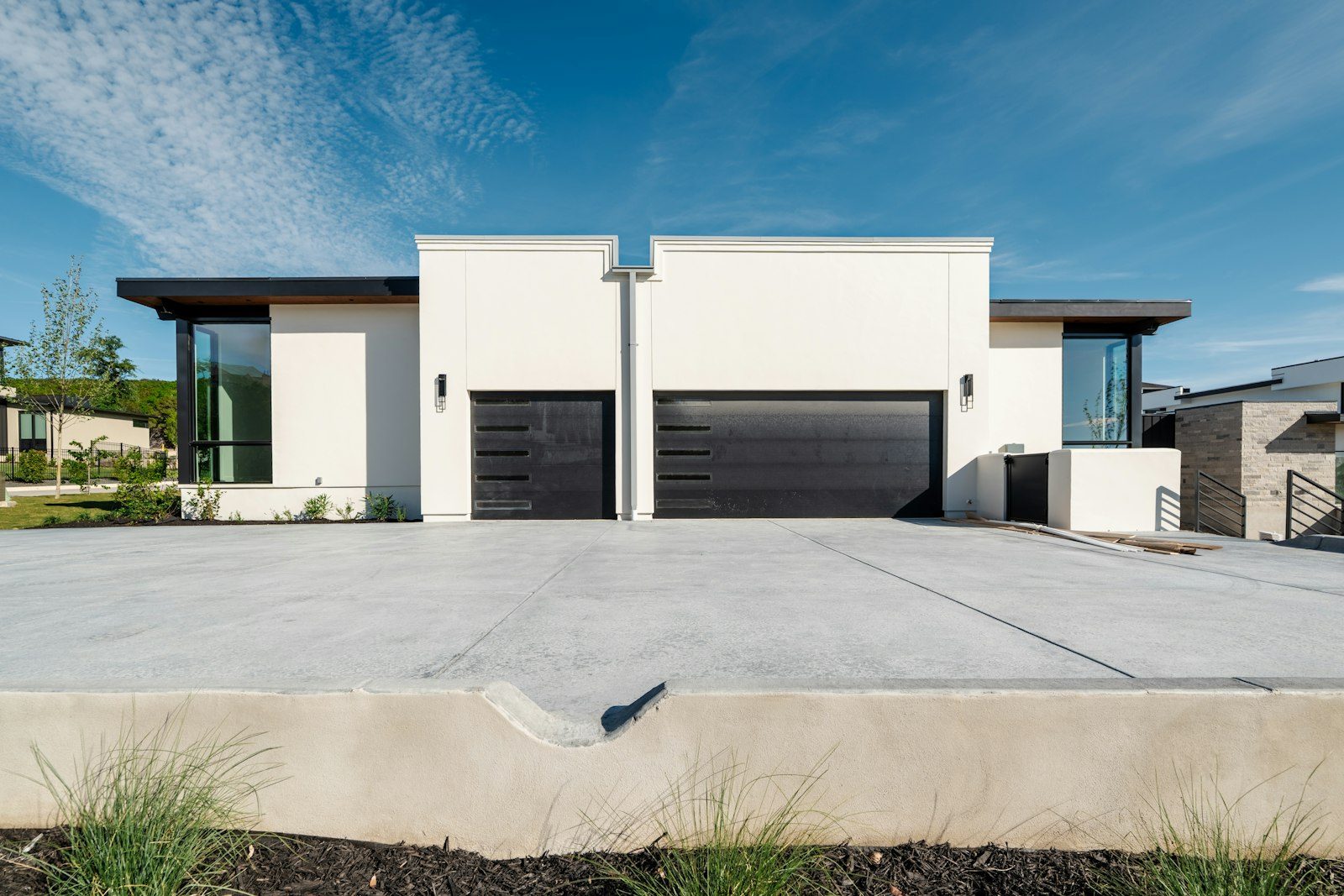
Two products, two different jobs, and one slab that only gets one shot at the right one.
Builders don't seal concrete. Not because they're cutting corners exactly, but because the driveway gets poured months before closing, nobody's living there, and sealing a slab isn't on the punch list. So the concrete that came with your house in Lagae Ranch or BellaMesa has probably never had anything on it, and it's been taking full sun at 6,450 feet and full freeze-thaw ever since.
The older side of town has the opposite problem. Slabs in Castle Pines North and the established parts of The Village at Castle Pines have often been sealed several times over the decades, by different crews with different products, and the layers don't always get along. Both situations are fixable. They just start from different places, and the first thing we do is figure out which one you have.
Concrete is porous. Water moves into it, and in this climate that water freezes, expands, and works at the surface from the inside. A sealer's entire job is to interrupt that. Everything else it does, darkening the color, adding a sheen, resisting oil, is a side benefit people happen to care about a lot.
There are two ways to interrupt it. A penetrating sealer soaks into the pores and lines them chemically, so water beads and rolls off while the concrete still breathes and still looks like concrete. A topical sealer sits on top as a film, gives you the wet look and the gloss, protects against stains better, and has to be renewed on a schedule because sunlight and traffic wear it away.
Neither one is the right answer for every slab. Anybody who sells you one product for the whole property is selling what's on their truck.
| Question | Penetrating sealer | Topical sealer |
|---|---|---|
| What it looks like | No change; the slab stays matte and natural | Darkens and enriches color, from satin to high gloss |
| Where it lives | Inside the pores, chemically bonded | On the surface as a film |
| Freeze-thaw protection | Excellent, and it keeps working after the surface wears | Good while the film is intact, poor once it wears through |
| Traction when wet | Unchanged, since there's no film to get slick | Can be slippery; we add anti-skid grit on anything walked in the wet |
| Failure mode | It quietly stops working and water stops beading | Peels, flakes, or clouds white, and has to be stripped |
| Where we use it | Driveways, sidewalks, garage floors, exposed aggregate | Stamped, stained, and decorative surfaces where the look is the point |
Pour a cup of water on it and watch. If it soaks straight in, call us. The assessment and the written quote are free.
A fresh slab has to cure before anything goes on it. Twenty-eight days is the standard we hold to, and in cool weather we'll wait longer, because a slab that still has water working its way out will push a film right back off. That's the single most common mistake we get called to fix on newer properties: an eager owner or a landscaper sealed a driveway three weeks after the pour, and now there's a white haze across it.
Older slabs need a different conversation. We test what's already there before quoting. Beading means a sealer is still alive. A cloudy, chalky, or flaking film means an old topical product needs stripping, and stripping is real labor, not a rinse. Sometimes we find three products stacked on each other, and the cleanest path is to take it all off, grind lightly, and restart with a penetrating product.
The wet-look sealer everybody wants on their stamped patio is also the one that peels if you rush it. Slab has to be dry all the way through. Not dry to the touch. Dry. That's a judgment call, and it's the whole job.Straight from the crew
Late spring and early fall, and fall wins. The slab needs several dry days in a row beforehand, air temperature between roughly 50 and 90 degrees, and no chance of rain or a hard overnight drop for at least a day after. Sealing in September gets the coat down and fully cured before the freeze-thaw season starts working on your concrete, which is exactly the point of doing it at all.
Midsummer works if we start early. A slab in full afternoon sun at this elevation gets hot enough that a topical product flashes off before it levels, leaving lap marks you can't unsee. So we chase shade and start at sunrise. Winter is off the table outdoors. Interior floors we seal any month.
One thing to plan around: if concrete goes in this season, that first winter is the vulnerable one, and no sealer changes the deicer rule. Sand only. Come the following autumn we'll get a proper coat on it and set your schedule from there.
Still unsure about something?
Call the crew at (303) 569-4046 and we will talk it through.
Get a free, no-obligation estimate from a crew that knows Colorado soil, Colorado weather, and how to finish concrete that lasts.
Accessibility
Adjust the site to fit how you read and browse. Your choices are saved on this device.