
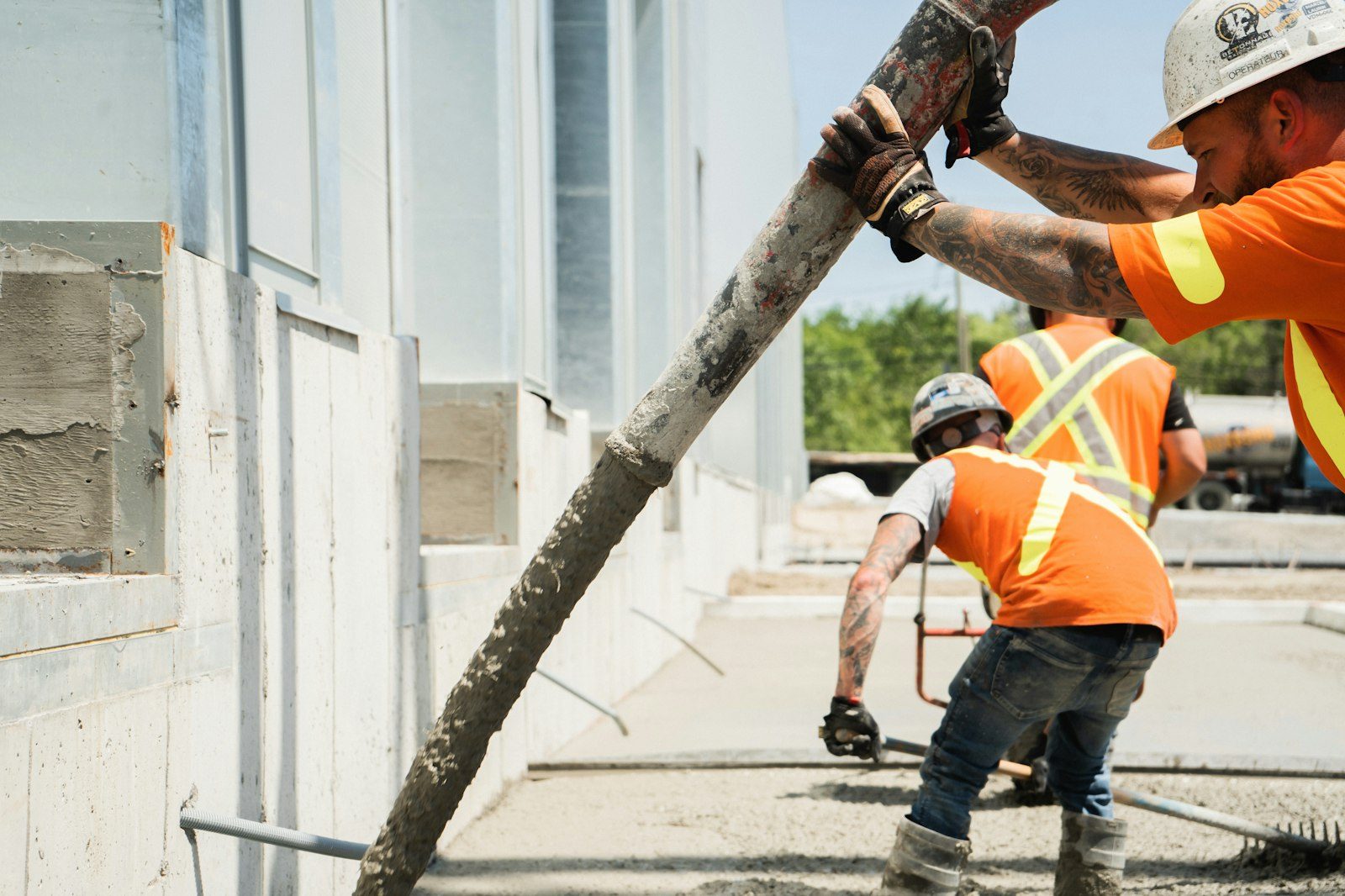
A watertight shell is won on pour day, at the joints and the penetrations, not with a coating afterward.
Pour day on a pond starts with a walk around the forms and a list of things that will never be reachable again. Every pipe through a wall. Every waterstop at a joint. Every bar the engineer wanted at the corners. Once concrete goes in, all of it is buried for the life of the feature, and a leak in any one of those places is a jackhammer conversation later.
So we take our time before the truck arrives, and then we move fast once it does. Ponds are unforgiving in a way patios aren't. A driveway with a small void in it is still a driveway. A pond with a small void in it is a wet spot in your lawn that gets bigger every month, and by the time you find the source you've lost a few thousand gallons and possibly your fish.
Subgrade first. The hole gets shaped, then a bed of compacted rock goes in under the floor so the shell bears evenly and any water moving through the soil has a path that isn't the underside of your pond. On the sloped BellaMesa and Daniels Gate lots we build for, we usually run a drain in that rock bed too, because hillside seepage under a pond floor is a real thing and an empty shell sitting over saturated ground is the one condition that can lift it.
Then the steel. A tied two-way mat, held up on supports so concrete gets fully around it, with extra bars turning the corners where a shell wants to crack. Then the forms and the penetrations: bottom drain, skimmer, returns, and any conduit, each one sleeved through the wall with a water-tight seal made up before the pour, not caulked afterward. And a waterstop wherever the floor meets a wall, because that joint is where nearly every leaking pond we're called to inspect turns out to be leaking.
We place the floor and the walls in one continuous operation whenever the shape allows it. A monolithic shell has no cold joint to fail. Where the size or the design forces a break, we plan exactly where that break lands, install a waterstop through it, and roughen the surface so the next placement bonds.
The mix is not the same one we'd send to a driveway. Lower water content, a tighter aggregate gradation, and often a crystalline waterproofing admixture batched in at the plant so the concrete itself resists water instead of relying on a coating. Then we vibrate. Thoroughly, in overlapping passes, because voids behind steel in a pond wall are leaks waiting for their turn. That's the loudest and least glamorous hour of the day, and it's the one that decides everything.
Finishing is deliberately plain. Steel troweling the interior too hard traps bleed water and can craze the surface. We float it smooth, tool the top edge, and get curing started the same day. Wet burlap and plastic, kept wet, for a solid week. Concrete that dries too fast at this altitude shrinks and cracks, and a cracked pond is not a pond.
We'll help you isolate whether it's the shell, a penetration, or the plumbing before anyone starts breaking concrete.
| Concrete shell | Rubber liner | |
|---|---|---|
| Lifespan | Decades when the shell is engineered and drained properly | Long, but it is a membrane, and membranes eventually get punctured or degrade |
| Shape and detail | Any shape, plus formed shelves, waterfalls, seat walls, and edges cast in | Follows the excavated shape, with folds and rock work hiding the edges |
| Repairing a leak | Locate, chase the crack, and patch. Involved but permanent | Patch kit if you can find the hole. Finding it under rock and plants is the hard part |
| Wildlife and dogs | Nothing to claw or puncture, no folds for debris to collect in | Vulnerable to claws, herons, and shifting rock work |
| Cure before fish | Needs curing time and repeated fill-and-drain cycles first | Inert once rinsed, so stocking can happen sooner |
| Where it wins | Formal features, steep sites, walls that also retain soil, anything permanent | Naturalistic garden ponds where budget and speed lead the decision |
Nearly every leaking pond we get called to has the same story. Somebody poured the floor one week and the walls the next, with nothing in the joint between them. That seam is where the water leaves.What our crew lead tells homeowners
Still unsure about something?
Call the crew at (303) 569-4046 and we will talk it through.
Get a free, no-obligation estimate from a crew that knows Colorado soil, Colorado weather, and how to finish concrete that lasts.
Accessibility
Adjust the site to fit how you read and browse. Your choices are saved on this device.