
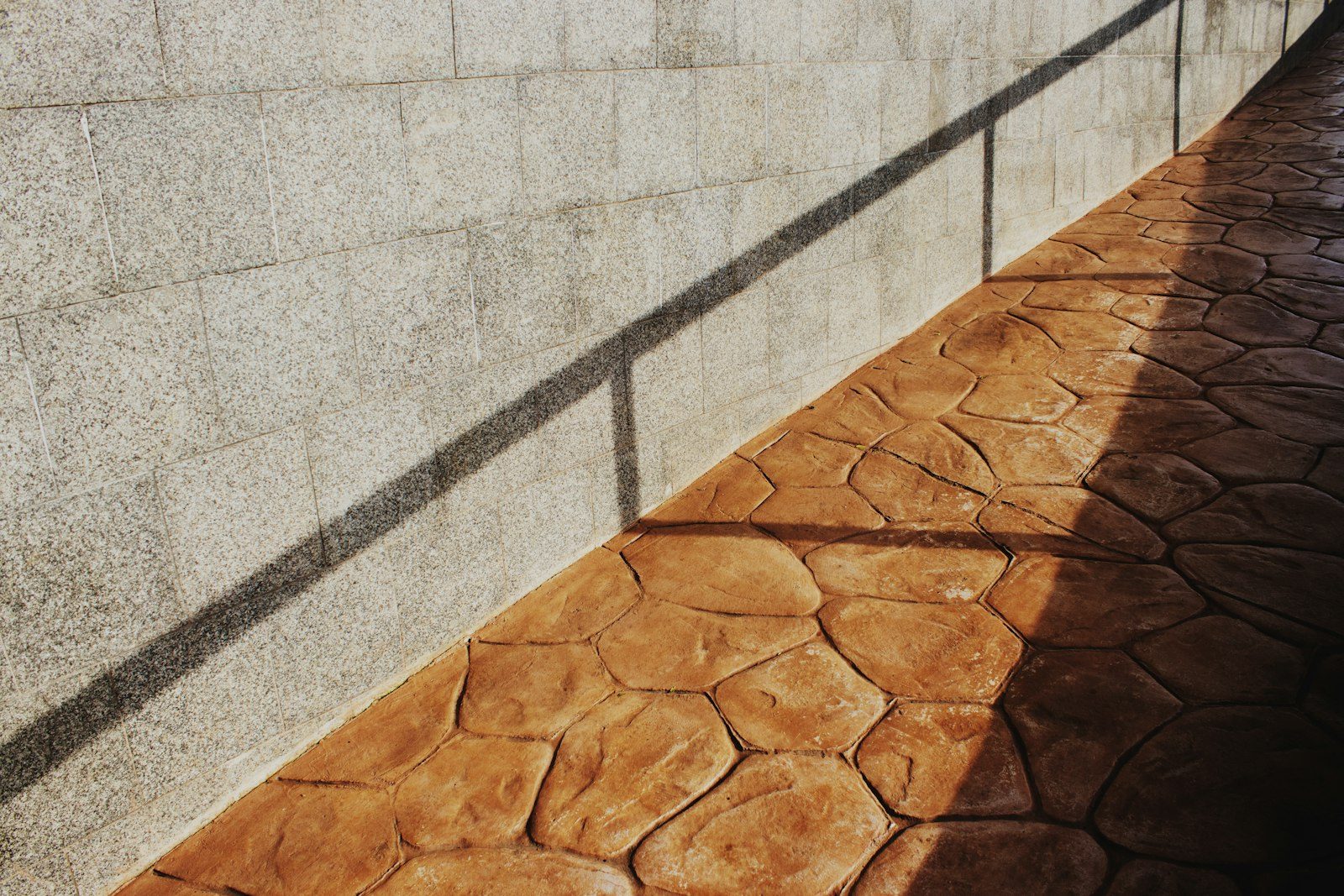
Nothing an association owns gets used more hours a day, or gets looked at less often, than its concrete.
Boards think about concrete once a year, when the reserve line comes up or somebody trips. Residents think about it daily and never once call it concrete. They call it the walk to the mailboxes, the spot where the stroller wheel catches, the corner that ices over, the piece of the loop everybody steps around.
We run community-wide concrete programs for associations across Arvada, and the useful way to plan one starts from how the property gets used rather than from a map of panel numbers. The panels that go first are never spread evenly. They cluster wherever life happens.
| Time of day | What is carrying weight | What that use does over the years |
|---|---|---|
| Before seven | Dog walkers and runners on the loop, same direction every day | Nothing structural, but this is when a lifted panel becomes a fall in the dark |
| Morning rush | Driveway aprons, guest parking, and the walk to the bus stop | Aprons take vehicle loads on sections poured at walk thickness, so they fail first |
| Midday | Delivery vans on aprons and contractor trucks parked on the curb line | Point loads on unreinforced edges. Curb faces and apron corners break here |
| After school | Bikes, scooters, and the pinch point at the mail kiosk | Concentrated traffic in a small area, plus the puddle nobody fixed, wearing the surface unevenly |
| Evening | Pool deck, clubhouse entry, courts, and the walks between them | Amenity flatwork takes seasonal bursts and chemical exposure that ordinary walks never see |
| Overnight | Irrigation running, temperatures dropping, meltwater moving underneath | This is the shift that breaks concrete. Everything else only wears it |
The first job on any program is drawing the line between association concrete and homeowner concrete, because getting it wrong turns a routine project into a governance argument. Common area walks, amenity flatwork, and shared drives are typically the association's. Private driveways are not. Aprons are the piece that varies most, so confirm them against your governing documents before the scope goes out rather than after a resident asks.
Once the line is drawn, the failure pattern is remarkably consistent. Panels at the mail kiosk, the pool gates, the clubhouse entry, and any pinch point where the walk narrows go first. Then anything a vehicle crosses that was poured as a walk. Then the shaded runs on north sides, where snow lingers and the ground under the panel never dries out between February and April.
Property age shifts the emphasis. Newer communities out at Candelas, Leyden Rock, and Whisper Creek have young concrete and full reserve schedules, so their programs cover a few settled panels on graded fill plus amenity surfaces getting harder use than anyone projected. Established neighborhoods around West Woods are into real replacement cycles, with original walks that have been ground and patched enough times. Smaller associations near Olde Town own the least concrete and the oldest, so their programs run short and deep rather than broad.
We will walk the property with a board member, mark and count panels by priority, and hand you a phased scope you can actually put in a reserve discussion.
Late spring through early fall is the working season, and the phases we like best land in May, June, and September. Summer works, though hot dry afternoons at this elevation demand early starts and hard curing, and residents are home more in July than in any other month. What we avoid is packing a large program into October and racing the first hard freeze, because the last phase always slips and the last phase is the one that gets rushed.
Inside a phase we work in small blocks so nobody loses access for long. Demo and haul-off one day, base and forms the next, placement the day after. Anyone whose apron is in the block gets written notice with dates, and temporary parking gets staged before we cut anything. Nobody should learn their driveway is closed by walking out to a saw crew.
The first winter after a phase, change one habit: no chemical deicer on new panels. Sand only that season. Tell the snow vendor in writing, because a contract written in August knows nothing about concrete poured in September, and magnesium chloride on young concrete is how a new walk looks a decade old by April.
Still unsure about something?
Call the crew at (303) 569-4046 and we will talk it through.
Get a free, no-obligation estimate from a crew that knows Colorado soil, Colorado weather, and how to finish concrete that lasts.
Accessibility
Adjust the site to fit how you read and browse. Your choices are saved on this device.