
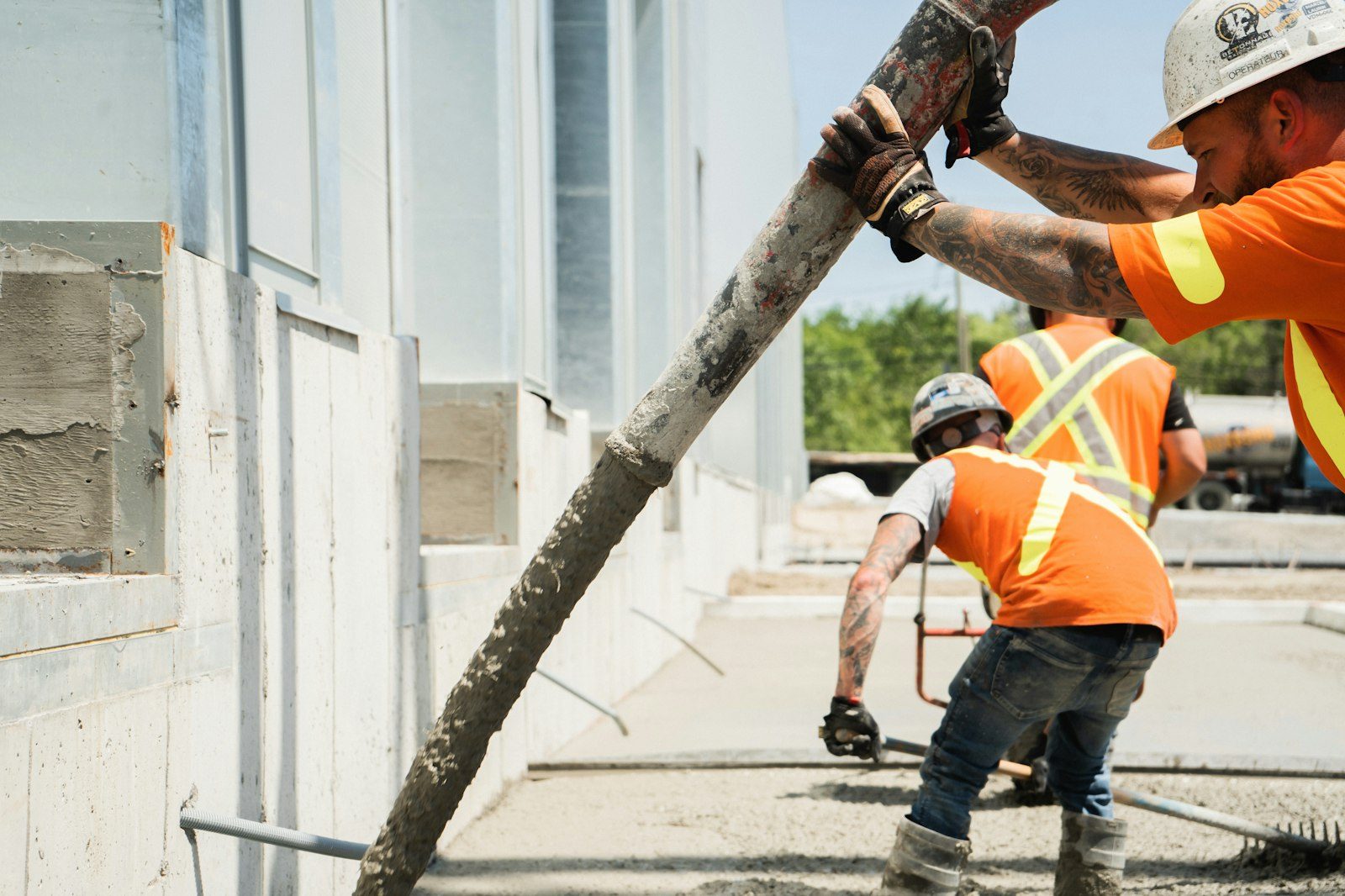
Stair-step cracks, sticking doors, a leaning stoop: the house is telling you what the clay is doing.
You can spot a moving foundation from the sidewalk if you know where to look. A stair-step crack climbing the brick near a corner. A front door that's been planed twice and still rubs. Trim gapping at the porch ceiling, a chimney a hair out of plumb, concrete steps pulling away from the stoop. None of those are cosmetic accidents. They're the house reporting what the ground underneath it is doing.
Go Denver Concrete handles foundation work across Arvada with a structural engineer on staff, and in this trade that matters more than anywhere else, because telling a harmless shrinkage crack from real settlement is not a guessing game. We look, we measure, and we tell you which one you have. Sometimes the answer is watch it and call us if it grows. We give that answer a lot. It's free.
The clay under much of the metro area swells when it soaks and shrinks hard in drought, and a foundation rides that cycle like a boat on a slow tide. The older homes around Olde Town have had the longest exposure: decades of wet springs and dry autumns, plus every gutter and grading decision previous owners ever made, all recorded in the walls. The west side carries a different risk profile. In Candelas, Leyden Rock, and Whisper Creek, the house pads sit on engineered fill. Pads compacted properly behave themselves. The rare one that wasn't shows up as early, localized settlement, often at a single corner while the rest of the house stays put.
Water management is half of this trade. Downspouts dumping at the wall, grade pitched backward, thirsty landscaping planted tight against the house: all of it feeds the swell-and-shrink cycle. Sometimes fixing the water fixes the movement, and that's the cheapest outcome there is.
| Symptom | What it usually means | Urgency |
|---|---|---|
| Hairline vertical crack in a foundation wall | Shrinkage from the original cure | Low. Photograph it, watch it, seal it against water |
| Stair-step cracks through brick or block | Differential settlement at that corner | Real. Get it evaluated while the options are still cheap |
| Doors and windows going out of square | The frame is distorting as the foundation moves | Real. Especially if it changes with the seasons |
| Horizontal crack in a basement wall | Soil pressure pushing the wall inward | High. This one goes in front of the engineer this week |
| Stoop or garage slab sinking away from the house | Fill settling along the foundation | Depends. Often slab-only, but it's showing you where the water goes |
Text a picture with a coin in frame for scale. Our engineer reviews every one, and if it's the harmless kind, we'll happily tell you to keep your money.
When a foundation genuinely needs help, the repair has to reach past the problem soil. Steel push piers or helical piers carry the structure's load down to material that doesn't move with the weather, and then the house gets lifted back toward level and locked off. That's the real fix for settlement. Epoxy injection has its place too, but understand what it is: a crack repair, not a foundation repair. Inject a wall that's still moving and you've bought a tidy-looking crack that reopens next season.
This is where having our own engineer earns its keep. The repair plan starts from measurements and load paths, not a commission sheet, and you get the documentation. If you ever sell the house, that paper trail is worth real money.
Cracks around here tend to open widest at the dry end of summer and tighten after spring moisture comes back. So a crack that seems to have healed in May hasn't healed; it's breathing. The repair work itself runs all year. Pier crews push through winter without much trouble, since piers bear far below any frost, and the winter calendar is often easier to get on. What shouldn't wait for a convenient season is the evaluation. Movement caught early is a small job in any month. Movement ignored for five years is a big one in every month.
Homeowners apologize for calling us about small cracks. Don't. The cheap fixes all happen early. The expensive jobs are the ones where somebody watched a crack for six years and painted over it twice.The crew lead's read on it
Still unsure about something?
Call the crew at (303) 569-4046 and we will talk it through.

Get a free, no-obligation estimate from a crew that knows Colorado soil, Colorado weather, and how to finish concrete that lasts.
Accessibility
Adjust the site to fit how you read and browse. Your choices are saved on this device.